UX design stands for USER EXPERIENCE DESIGN. The aim of of UX design is to make products simple, efficient, and satisfying to use.
UX designers research user behavior, understand their needs, and then based on that data design solutions that solve the issues. They work on websites, mobile applications and software applications as well.
The factors considered for UX design are as follows
For example, you open Swiggy. You browse through restaurants, dishes and the menu.You place an order within minutes. This smooth experience is the result of well-researched UX design.
If you’re looking to build a solid career in UI/UX design, then IIM SKILLS is here to provide you with the Best UI/UX Course in India with Gen AI.
Want to know more about UI/UX - Check out these articles below:
Why the UX Design Process Is Important
The UX design process is important because it helps create interfaces that make it easier for users. Designers gather insights and test ideas before launching the final product.
Here are some reasons why the UX design process matters:
1. It focuses on users
The process begins with understanding users. This ensures that the product solves actual issues that plague the applications and websites.
2. It reduces risks
It helps identify problems before development begins. This saves time and money.
3. It improves usability
A structured process helps designers refine and make interactions smoother.
4. It increases customer satisfaction
It creates positive experiences and builds user retention
Without a clear UX design process, you often build products that are confusing or difficult to use. A structured approach ensures that the final product is both functional and enjoyable.
Other Professional Courses from IIM SKILLS
10 Steps in the UX Design Process
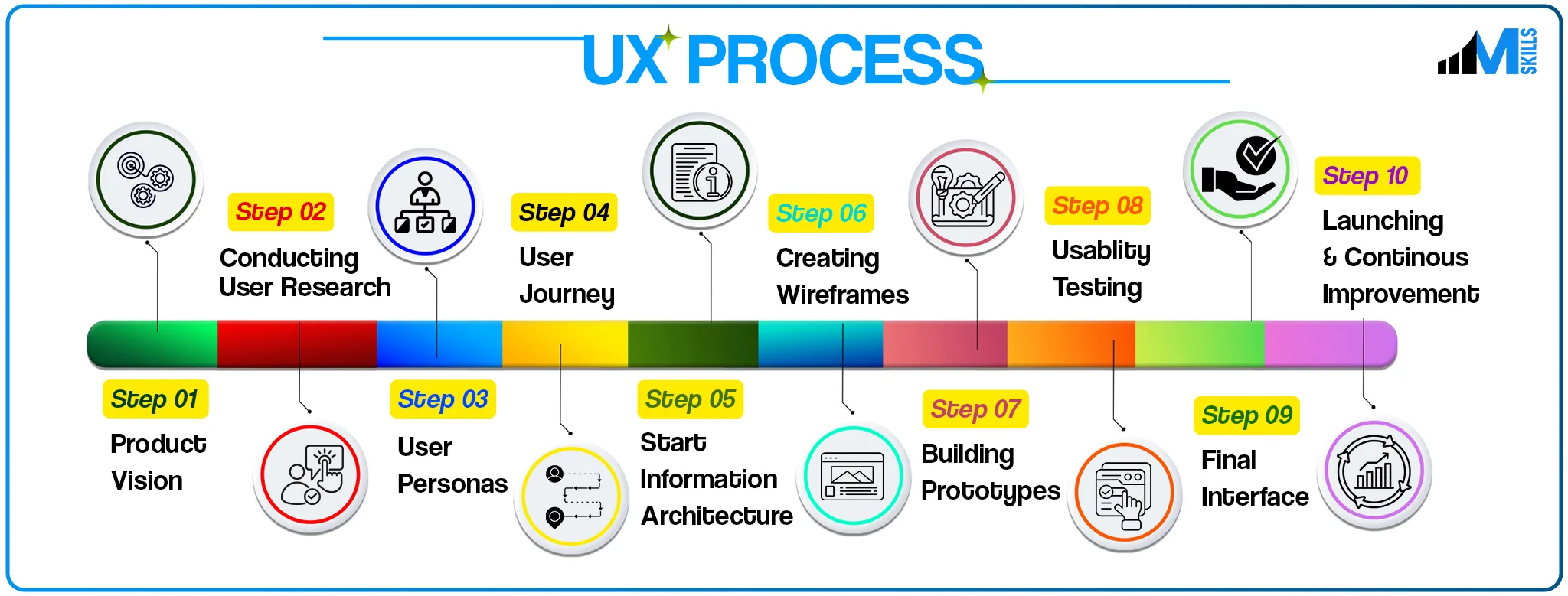
The exact process may vary across companies, but most UX designers follow a similar step by step pattern. The following 10 steps represent the UX design process used in modern product development.
1. Defining the Product Vision
The first step in the UX design process is understanding the purpose of the product. Designers work with the various teams in the organization to define the product vision, mission, and target audience.
This step considers the following questions.
- Who will use the product?
- What are the business objectives?
For example, a company may want to build a budgeting app that helps young professionals track expenses. Understanding the product vision ensures that everyone on the team is aligned before moving forward.
This stage sets the ball rolling for UX design process
2. Conducting User Research
User research is one of the most vital steps in UX design. Designers need to understand the people who will use the product.
User research can include:
- Interviews with potential users
- Surveys
- Observing user behavior
- Studying the competition
3. Creating User Personas
After gathering research data, designers create user or buyer personas. Personas are a model character representing the target typical user.
Each persona includes information such as:
- Age
- Profession
- What they Do
- Motivations
- Their Issues
- Behavior patterns
Let us take an example - Diya, a 28-year-old marketing professional who wants an easy way to manage monthly expenses but finds applications like complex spreadsheets. Personas help designers keep the user in mind when they are designing the website or application. 4. Defining User Journeys
A user journey maps the steps a person takes when interacting with a product. It shows how users move from one stage to another while completing a task.
For example, Amazon user journey for an online shopping app may include the following:
- Searching for a product
- Adding items to the cart
- Completing the checkout process
- User journeys also give opportunities to make interactions faster and more engaging
It is about organizing content in a logical and clear structure. Users should be able to find information quickly. Designers create structures such as navigation menus, and categories.
For example, Amazon organizes products into categories like electronics, clothing, and home appliances. Information architecture helps users move smoothly through the product and locate what they need without confusion.
Also Check:
6. Creating Wireframes
Wireframes are basic layouts that show how the interface will look. They focus on structure rather than visual design.
It includes the following:
- Page layout
- Buttons
- Navigation
- Content sections
7. Building Prototypes
Prototypes are interactive models of the product. Prototypes simulate real interactions. Users can click buttons, navigate pages, and experience the flow of the interface.
For example, a prototype of a travel booking app might allow users to search flights, view options, and complete a booking process. Prototypes make it easier to identify usability issues early.
8. Conducting Usability Testing
Usability testing is actually observing real user when they interact with the prototype. Designers ask users to complete tasks and observe how they navigate the product.
This helps identify problems such as:
- Confusing navigation
- Difficult forms
For example, if users struggle to find the checkout button, the design needs improvement.
9. Designing the Final Interface
Once testing is complete and improvements are made, designers create the final visual interface.
These are as follows:
- Colors
- Typography
- Icons and graphics
- Spacing and layout
- Brand consistency
The goal is to create an interface that is visually appealing while maintaining usability.
10. Launching and Continuous Improvement
The UX design process does not end right after the product is out there launched. Designers have to mandatorily observe user behavior and gather feedback continuously.
The Design team analyzes stuff like the following:
- User engagement metrics
- Conversion rates
- Customer feedback
- Reviews
Continuous improvement ensures that the product evolves with user needs and remains competitive in the market.
If you’re looking to upgrade your skills in 2026, then here are some IIM SKILLS Master Courses you should go for:
FAQs About the UX Design Process
1. What is the main purpose of UX design?
The main purpose of UX design is to create products that are easy to use and help users. It focuses on improving the overall experience when interacting with a product.
2. What skills are required for UX design?
Important skills include user research, wireframing, prototyping, problem-solving, communication, and basic understanding of design tools.
3. Is UX design the same as UI design?
No. UX design focuses on the overall user experience as well as the functionality of a product. UI design focuses on visual elements such as colors, typography, and layout.
4. How long does the UX design process take?
Small projects may take a few weeks, while large product designs can take several months.
5. Why is user research important in UX design?
Through UX design you realize the needs, goals, and challenges of the intended consumer. You can solve real problems that are backed by data rather than some assumptions that might or might not work.
Conclusion
Today, digital products don’t succeed just because they have many features. They succeed because of the experience they give you. A website or app might have powerful tools, but if it feels confusing or difficult to use, you will probably stop using it very quickly.
UX design focuses on making products appeal to your sensibilities.The purpose is to make sure everything feels clear and easy from the moment you open an app or visit a website.
This process helps them understand what you actually need.Let us know what you think of the UX design process and whether you feel like it needs more incisive research and understanding to appeal further to the consumer.
If you’re someone who’s looking to upskill, then IIM SKILLS is the right platform to learn Best Online Courses with Gen AI.