Before we delve deep into UX design in healthcare, it is important to understand what UX design means.
User Experience design, or UX design as we popularly refer to it, is the process of creating digital products like websites and applications that are convenient, efficient, and meaningful for users. It is a key part of UI/UX design, where UX focuses on the overall experience while UI (User Interface) design deals with the visual and interactive elements.
The main purpose of UX design for any sector including healthcare is the efficiency with which users can interact with the digital system. It is about making the experience smooth, intuitive, and interesting to use.
The main components of creating at par UX design are research, user testing, IA, and usability. The aim is to make things work better for people.
If you’re looking to build a solid career in UI/UX design, then IIM SKILLS is here to provide you with the Best UI/UX Design Course in India with Gen AI.

What makes a good UX design in healthcare?
UX design is not about making things look appealing or good, It is about solving the real problems that your user feels when interacting with your digital product.
A good UX design will invariably help users complete their tasks without any confusion. Navigating a website, using an app, or interacting with a digital tool, has to feel natural and easy- this is what sets good UX design vs bad UX design apart..
In healthcare, this is even more vital because users are often stressed, unwell, or unfamiliar with the technological aspect. They usually don’t have the willingness to spend a lot of time trying to figure out buttons and instructions.
Prepare for your next role with these UI/UX interview questions, covering good and bad design concepts.
UX Design in Healthcare
UX design in healthcare by definition is the process of improving how patients and healthcare providers interact with digital systems and the services.
From booking an appointment to accessing lab reports, every aspect should be easy to understand and use. Poor design can lead to missed appointments, wrong data entry and delays in treatment. This can be greatly detrimental to the public.
UX design in healthcare is applied in various areas like patient portals, medicine platforms, hospital management systems, and wearable health devices like smartwatches etc.
For example, a telemedicine app which has a clear navigation and a simple interface will help patients connect with doctors quickly. On the other hand, a complicated interface can create frustration and waste time.
Learn about Shneiderman's Eight Rules of Interface Design
What are the benefits of UX design in healthcare?
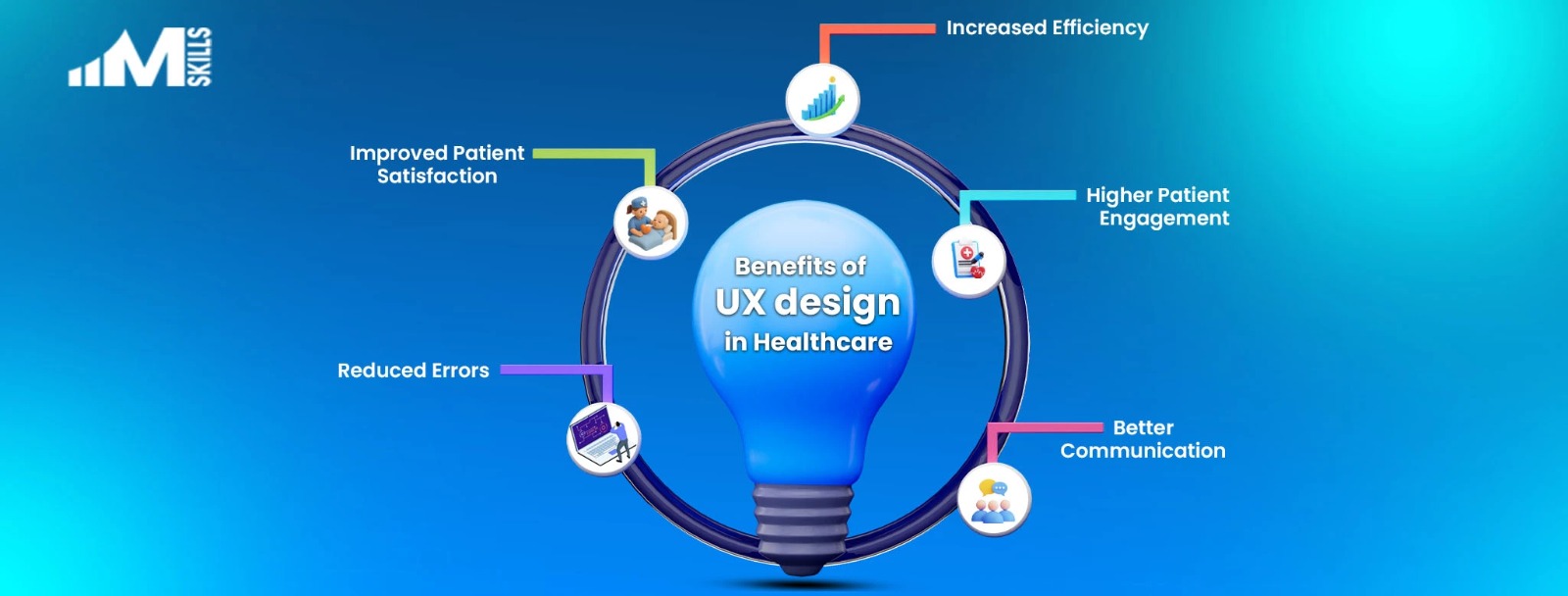
There are several benefits of UX design in healthcare. When systems are built with users in mind, the entire process becomes peaceful to handle. You have to understand, as a UX designer, designing websites and applications for healthcare is not the same as designing for any other sector. You have to be mindful of a lot of things that can help the user. So, how does UX actually benefit the healthcare sector. Let us see.
One major benefit is UX design will result in improved patient satisfaction. When patients can easily book appointments, access records, and communicate with healthcare providers, their overall experience improves significantly.
Another benefit is minimized errors. Clear interfaces and well-structured applications minimize the chances of mistakes. Whether it is entering patient data or reviewing prescriptions, everything becomes smoother to implement.
UX design also improves the overall efficiency. Doctors and staff can complete tasks faster when systems are intuitive.That way, they can concentrate more on patient care instead of struggling with technology.
Lastly, a great UX design leads to higher engagement. Patients are more likely to use healthcare apps and follow treatment plans without giving up when the interface is simple and user-friendly.
 Learn how to become a UI/UX designer here.
Looking at the broader picture, the benefits of UX design in the healthcare sector go beyond just the individual users.
Healthcare organizations can reduce operational costs largely by improving system efficiency. When processes are streamlined, you need less time and effort top get the entire process rolling.
UX design also supports better communication between patients and providers. Features like easy messaging, reminders, and notifications help keep everyone in the loop. If every person involved is aware of treatments, changes in treatment, and latest updates, then the whole process is hassle-free.
Another important benefit is accessibility. Good UX design ensures that systems can be used by people of all ages and abilities, including those who are not well-versed with technology. Moreover, it builds trust. Patients are more likely to have faith in healthcare platforms that are clear, and easy to use.
A thorough understanding of the UI UX designer salary can help you make the decision of whether you want to embark on a UX/UI design career.
If you’re looking to know more about UI UX Design, then you should check out our other blogs:
How is UX Design Used in Healthcare?
There are many ways UX design used in healthcare is transforming the industry. Patient portals are one of the most common examples. These platforms help users and patients to check medical records, and schedule appointments. You can also communicate with doctors in one place.
Telemedicine platforms are also an important area. UX design ensures that virtual consultations are smooth.
Mobile health applications also rely on UX design. These apps help users track their fitness, monitor health conditions, and receive reminders for medication.
Medical devices are also becoming more user-friendly due to UX design. Devices like glucose monitors and wearable trackers are popular and easy to understand.
Hospital websites benefit from UX design. An easy navigation, easy appointment booking, and helpful information make a big difference in user experience.
If you’re looking to upgrade your skills in 2026, then here are some IIM SKILLS Master Courses you should go for:
UX Design And Its Impact on Patient Engagement
UX design in healthcare plays a key role in improving patient engagement. When digital platforms are easy to use, patients are more likely to take an active role in managing their health. This includes booking appointments on time, following treatment plans, and checking their medical records timely.
Check out The top UI/UX Designer Skills to start a rewarding career in UI/UX.
If you are Worried If AI will replace UI/UX Designers, then this article is for you.
The Accessibility Factor in UX Design in Healthcare Sector
Accessibility is a crucial aspect of UX design in the healthcare sector. Healthcare systems must be designed for everyone. This includes elderly users, people with disabilities, and those with limited digital knowledge.
A good UX design ensures that content is easy to read, buttons are clearly visible, and navigation is simple , all of which are guided by core UX design principles.
Features like larger fonts, voice assistance, and multilingual support helps achieve that while also aligning with essential UI design principles that focus on visual clarity and accessibility.
An Inclusive design is a priority and a necessity. It should not be an after- thought. If you want reliability and trust to grow and then remain intact, a good UX design in healthcare is a must. In a diverse country like India, accessibility-focused UX design can make a significant difference for patients as well as the medical fraternity.
Also Check: UX Design Process: 10 Steps Designers Need to Know
If you’re looking to enroll in professional online courses then IIM SKILLS is here to offer the best courses with placement. Here are:
The UI/UX Design Course Syllabus from renowned institutes teaches design principles in depth.
What are the Challenges in UX Design in Healthcare?
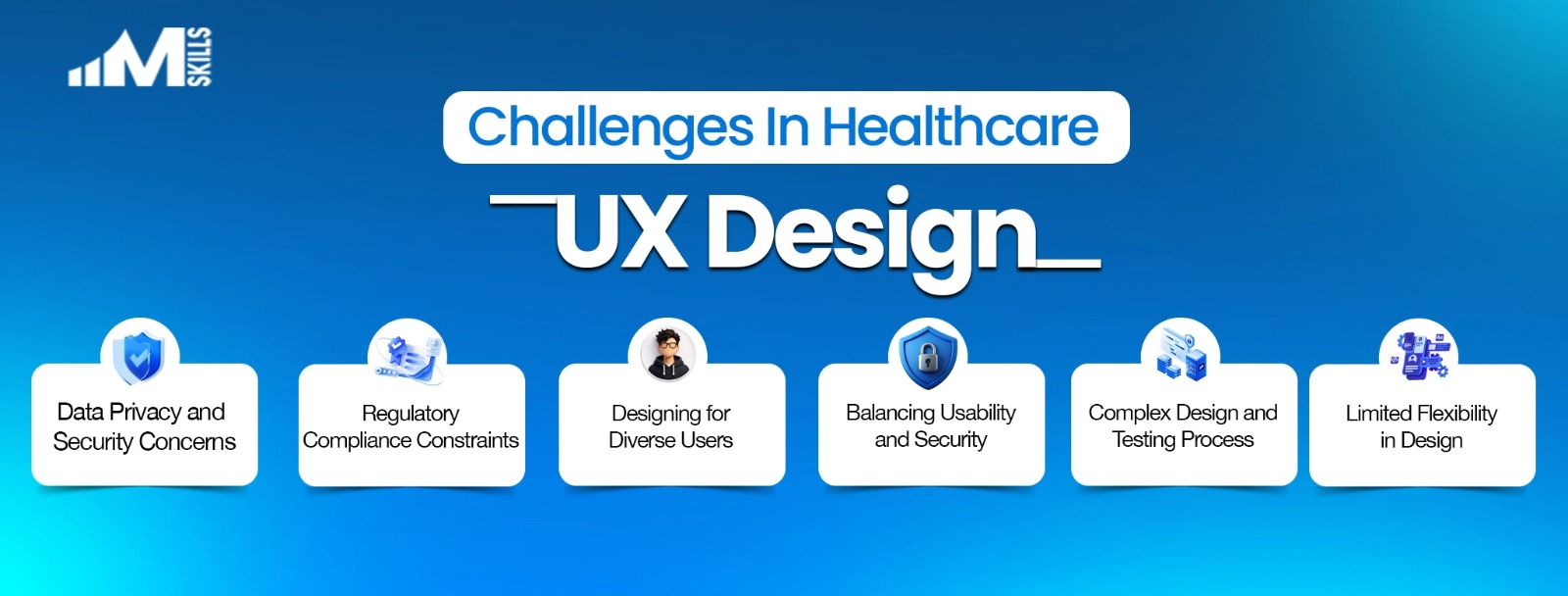 Despite its benefits, implementing UX design in healthcare comes with its fair share of challenges.
One challenge is data privacy and security. Designers must ensure that systems are user-friendly. But protecting sensitive patient information is mandatory.
Another challenge is the aspect of regulatory compliance. Healthcare systems must follow strict guidelines. That, at times compromises the flexibility in the apps.
Designing for everyone requires careful planning and testing as well. So, it is a difficult process that needs to be handled with precision and thoughtfulness.
Understand the difference between good design vs bad design
Also Check:
The Future of UX Design in Healthcare
The future of UX design in healthcare looks very promising. With the rise of AI and digital health tools, user experience will become even more important. Personalized healthcare experiences will rely heavily on UX design to deliver relevant information in a simple way.
As healthcare becomes more digital, the demand for better user experiences will only grow.
Know the difference between UI and UX
FAQs
1. What is UX design in healthcare?
UX design in healthcare is all about improving how patients and healthcare professionals interact with digital systems.
2. What are the reasons for the importance of UX design in healthcare?
The reasons for this are manifolds. To sum it up, It helps reduce errors, improve patient satisfaction, and streamline the work process.
3. What are the advantages of UX design in healthcare?
The advantages of having better UX design in healthcare include better usability, improved efficiency, and smoother patient engagement.
4. Where is UX design significant in healthcare?
UX design is used in healthcare in patient portals, telemedicine apps, mobile health applications, and medical devices like fitbits and smartwatches.
Conclusion
We have tried to give you a clear idea of how the healthcare sector can benefit from efficient UX design. As a UX designer, understand that UX design in healthcare is no longer an optional thing. As healthcare goes digital just like a lot of other industries, UX design will have to be efficient and easy to understand.
If you aspire to become a UX designer for the healthcare sector, keep the following things in mind. A good UX design is not just about the design only. It is about making healthcare more accessible, reliable, and human.
If you’re someone who’s looking to upskill, then IIM SKILLS is the right platform to learn Best Online Courses with Gen AI.