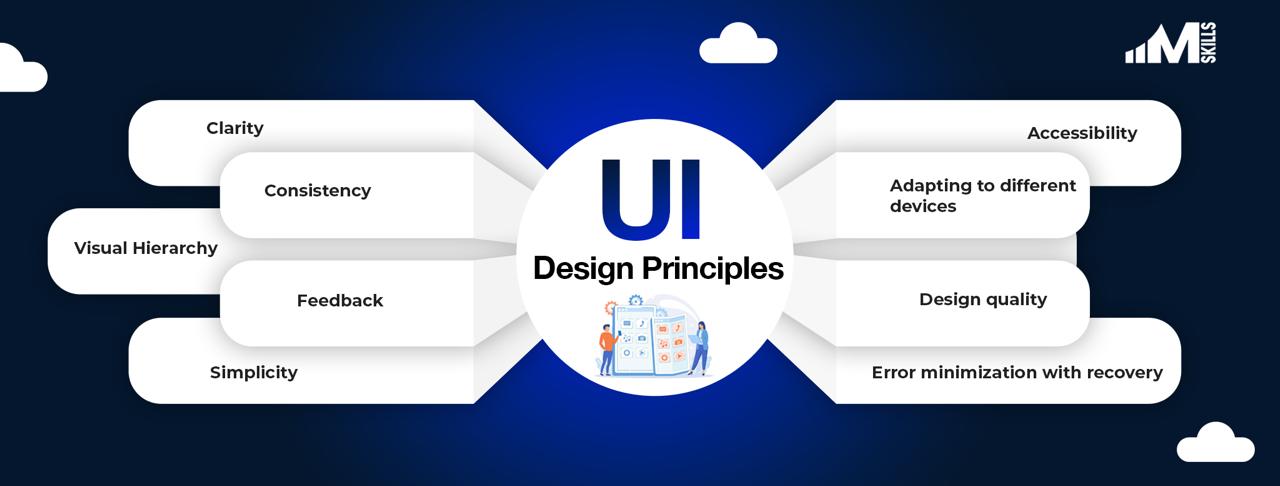
UI design principles are a set of rules that designers follow to create effective and user-friendly interfaces. These principles are to make the interactive elements of a product, such as buttons, typography, colors, layouts, and navigation appealing to the users.
The main aim of UI design is to make interfaces easy to understand and visually engaging so that retention is high. These principles reduce the mental gymnastics that you have to do otherwise to figure things out. It improves usability, and enhances user satisfaction.
UI design principles are not rigid rules but flexible instructions that can change according to the demand of the website and application. You can change them according to context, target audience, and platform requirements.
If you’re looking to build a solid career in UI/UX design, then IIM SKILLS is here to provide you with the Best UI/UX Design Course in India with Gen AI.
Top UI Design Principles for Effective User Interfaces
Clarity
Users should immediately understand what each element on the screen represents and how to interact with it. If users feel confused, they are more likely to lose interest and stop interacting.
For example, a “Submit” button should be clear and easy to find. Avoid unnecessary decorative elements that distract from the main purpose of the interface.
Clarity also means doing away with confusion. Every element should have a clear function. There should be no doubt about what will happen when a user interacts with it.

Prepare for your next role with these UI/UX interview questions, covering good and bad design concepts.
Consistency
Consistency is all about creating familiar experiences. Similar elements should behave in similar ways across the interface. Users should be able to encounter familiar patterns. That way, they can navigate the product more easily without relearning how to go about it.
Consistency means colors, fonts, button styles, spacing, and navigation patterns. For instance, if one button style is used for primary actions, it should remain the same throughout the application.
Learn about Shneiderman's Eight Rules of Interface Design
Visual Hierarchy
This is about guiding the attention of the user. Visual hierarchy refers to the arrangement of elements so that the most important information catches the attention of the user first.
Designers use size, color, contrast, spacing, and typography are all elements to help with visual hierarchy. For example, headings are usually larger and bolder than body text, making them easier to notice. essential concept to understand when learning how to become a UI/UX designer and create effective, user-friendly interfaces.
If you’re looking to know more about UI UX Design, then you should check out our other blogs:
Feedback
Feedback is of the utmost importance in UI design. It informs users about the result of their actions. Without feedback, users may feel uncertain about whether their action went through or not.
For example, when a user clicks a button, there should be a visual response as confirmation. Similarly, error messages should clearly explain what went wrong and how to fix it.
Effective feedback builds trust. It keeps users engaged. It reassures them that the website and application is performing as expected.
If you’re looking to upgrade your skills in 2026, then here are some IIM SKILLS Master Courses you should go for:
Simplicity
Simplicity is about eliminating unnecessary elements. A simple interface allows users to complete tasks quickly without distractions.
This does not mean that the design should be minimal to the point of being bland and lacking the functionality. Instead, it should present only the most relevant information and options at any given time.
Check out The top UI/UX Designer Skills to start a rewarding career in UI/UX.
If you are Worried If AI will replace UI/UX Designers, then this article is for you.
 Accessibility
Accessibility ensures that interfaces can be used by people with different abilities including people with different impairments.
Readable fonts, sufficient color contrast comprise some of the elements in accessibility principle.
Also Check: UX Design Process: 10 Steps Designers Need to Know
Adapting to Different Devices
Responsive design is next and a very important UI Design Principle. In today’s digital lands,we use a range of digital devices.
Designing responsively is crucial for providing a seamless user experience, regardless of how users access the product. It also aligns with key UX laws, which emphasize creating consistent and user-friendly experiences across all platforms.
Design Quality
Design quality is a key UI Principle that denotes how an element should be used. For example, buttons should look clickable. If you have a slider, that should look like it is draggable. This is also called affordance. When affordances are clear, users can interact with elements without needing instructions. Poor affordance can lead to confusion and errors.
Error Minimization With Recovery
Good UI design minimizes the chances of user errors and provides easy ways to recover when mistakes happen. For example, confirmation dialogs can prevent accidental actions like deleting important information. Similarly, clear error messages and undo options help users recover quickly. This clearly highlights the difference between good design vs bad design, where thoughtful design supports users instead of confusing them.
As a designer, focusing on such elements helps create a more user-friendly interface that guides users even when errors occur.
UI vs UX Design Principles: What’s the Difference?
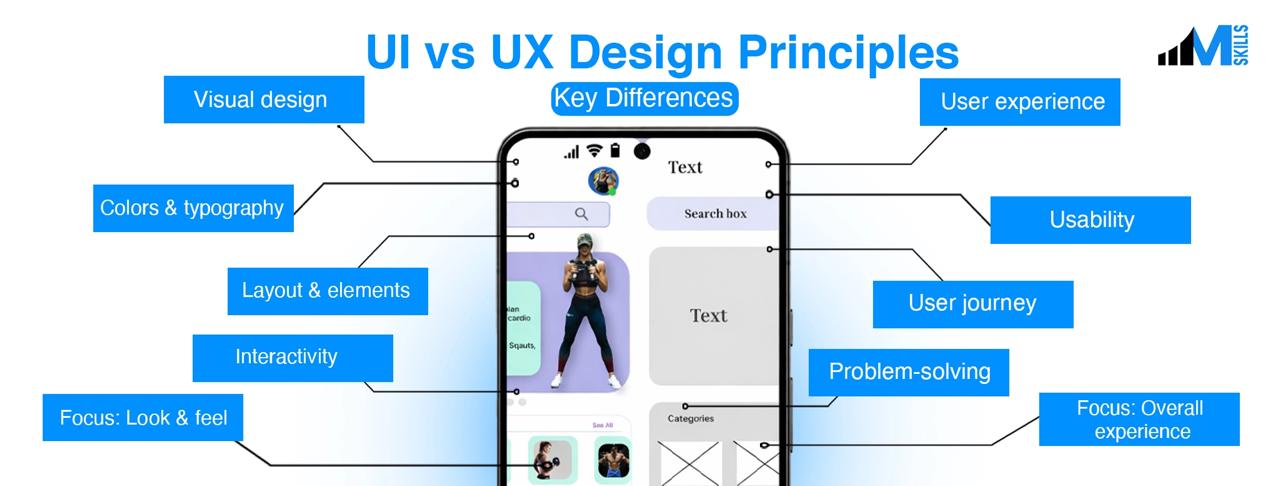
UI and UX design interrelated when it comes to digital products. One cannot function optimally without the other. However, they have very different roles in a digital interface. UI design is the visual and interactive aspects of a product. UX design is concerned with the experience of the user at every stage of the interaction.
UI design principles consist of the color schemes, typography, layout, and visual consistency. They aim to make the interface aesthetically pleasing so that they are enjoyable to use.
UX design principles focus on usability, user journeys, and problem-solving. UX designers consider how users feel while interacting with a product and whether they have to make changes to up the efficiency level of the interface.
Simply, UI is about how a product looks and feels on the surface, while UX is about how it works and how users experience it in totality. Understanding the difference between UI and UX helps designers create more effective digital products.
Both are essential and work in tandem to deliver the best experience when interacting with a website, mobile application, or software.
Also Check:
Why UI Design Principles Matter
UI design principles play a very vital role in determining the success of a digital product. A well-designed interface can improve user engagement, thereby retaining users. This, in the final stages drives conversions.
When users find an interface easy to use, they will return and WOM is going to work in your favour. On the other hand, a poorly designed interface can lead to frustration and extensive drop-off rates.
As a UI designer, follow UI design principles. You will invariably create products that are not only visually appealing but also functional and user-friendly.
A thorough understanding of the UI UX designer salary can help you make the decision of whether you want to embark on a UX/UI design career.
FAQs
1. What Do we Understand by UI design principles?
UI design principles are flexible guidelines and rules used to create easily accessible and visually appealing interfaces. Their primary characteristics are clarity, consistency, usability, and aesthetics.
2. Why is consistency so important in UI design?
Consistency is one of the most important principles because it's the basis of user retention. It helps users recognize patterns and handle interfaces. It reduces confusion and improves usability by making interactions predictable.
3. What are the key differences between UI and UX design?
UI and UX are both connected and are dependent on one another for a perfect experience. UI design emphasize on the visual and interactive aspects of any digital product. UX design is concerned with the overall experience and usability of the product.
4. How does visual hierarchy improve UI design?
Visual hierarchy guides your attention to important elements first. It helps users understand the structure quickly and easily.
5. Is it lucrative to be a UI designer?
The business environment today is extremely conducive to a design career. Every company requires digital applications like a website and mobile app and hence UI and UX designers both are in great demand.
So, yes, if you choose UI design, it is greatly lucrative. If you have knowledge of both UI and UX it is even more helpful for you in your career.
If you’re looking to enroll in professional online courses then IIM SKILLS is here to offer the best courses with placement. Here are:
The UI/UX Design Course Syllabus from renowned institutes teaches design principles in depth.
Conclusion
Here, we have covered the UI design principles and their uses and benefits. These principles act as the driving force behind great UI designs. Master UI design principles and you will create interfaces that remain at the top of the minds of the users.
If you’re someone who’s looking to upskill, then IIM SKILLS is the right platform to learn Best Online Courses with Gen AI.