To understand the difference, we first need to answer the question, what is product design?
Product design is the method by which designers create products that solve user problems. You as a designer take care of the functionality while giving users a seamless experience. Key elements comprising product design are understanding what the user needs, and identifying the issues plaguing the user experience. Based on that, you design solutions that are practical, and efficient.
A product designer usually works through multiple stages. These are research, ideation, wireframing, prototyping, testing, and refinement.
For example, when a team designs a food delivery app, like Zomato or swiggy, they think about how users will browse restaurants, place orders, track deliveries, and complete payments smoothly. This entire process constitutes the product design process.
What Is Industrial Design?
Now let us look into what industrial design is. Industrial design is the design and development of physical products that are manufactured at scale. It combines the principles of aesthetics, ergonomics, engineering principles, and manufacturing knowledge. Finally with these in the mix, you create products that are functional and visually attractive.
Industrial designers work on materials such as furniture, cars, appliances, electronics, medical devices, and other consumer goods.
An industrial designer considers factors that are as follows:
- Material selection
- Production methods
- Durability
- Cost efficiency
- Physical user interaction.
For example, think about a sleek coffee machine that is easy to operate, safe to use, cost-effective to produce. It is also visually aesthetic . that is a great example of an industrial design project.
Check out the top product design courses to make an informed decision on what to choose.
 Industrial Design vs Product Design: What is the Core Difference?
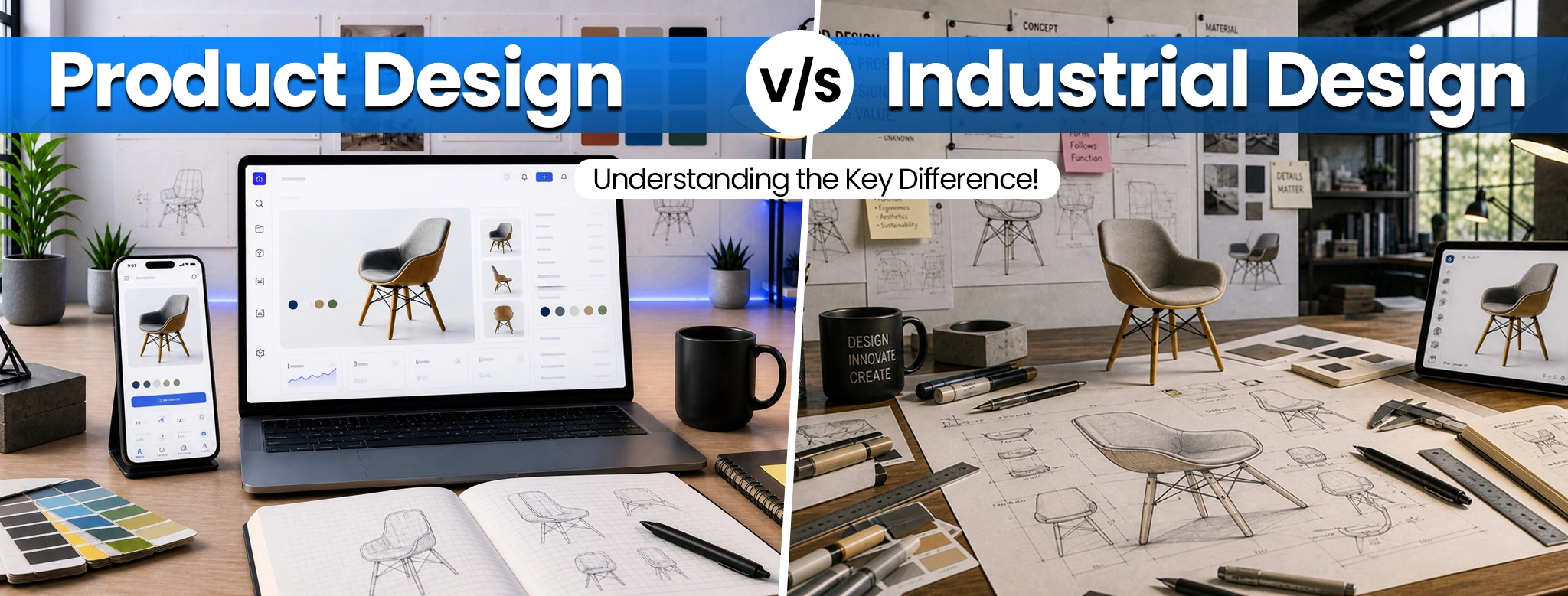
When comparing industrial design vs product design, the main difference lies in the scope of these two.
- Industrial design is about physical products and manufacturing processes.
- Product design has a broader scope. It can include both physical and digital products. However the strong emphasis is on user experience and problem-solving.
Scope of Work - Industrial Design vs Product Design
Scope of Work in Product Design
The work of product designers begins with your identifying a user problem. You conduct user research to understand pain points, behavior patterns, and expectations. Based on these insights, you create solutions that improve usability and experience.
Product designers often work on:
- Mobile apps
- Web platforms
- Software dashboards
Their work involves constant testing, iteration among other things. They refine designs, collaborate with UX researchers, developers, marketers, and business teams.
Check out this list of the Top Product designers in the world
Scope of Industrial Design
Industrial designers create physical products for real-world use. Their responsibilities often include sketching concepts, creating 3D models, selecting material. Then they evaluate ergonomics, and ensure products can be manufactured efficiently. Industrial designers collaborate with engineers and manufacturers.
What are the Product Design Examples?
It is always easier to understand the differences if we look at examples in the different categories.
Some of the product design examples are as follows:
- Mobile Applications
- Spotify
- Instagram
- Uber
Software tools such as:
E-commerce Websites - Online shopping experiences like Amazon, Myntra, Blinkitt are examples of product design.
If you’re looking to enroll in professional online courses, IIM SKILLS offers industry relevant courses with placement support. Here are some options:
What are the Industrial Design Examples?
Now, let us look at industrial design examples
Consumer Electronics:
- iPhone
- Dyson Airwrap
- Nintendo Switch
Furniture - Office chairs, desks, and modular furniture require industrial design thinking.
Home Appliances
Microwaves, fridge, air purifiers, washing machines, and coffee machines are all industrial design examples. Automotive Designs like cars combine industrial design, engineering, and user-centered approach to make it convenient to drive and navigate.
If you want to know about UI/UX Design, then you should check out our other blogs:
What Are the Skillsets Required for Industrial Design vs Product Design?
Below are the skillsets required for industrial design vs product design:
Skills Required for Product Designers
- User research is one of the most important skills. As a designer, you must understand customer behavior and work diligently to identify solutions.
- Wireframing and prototyping are equally important for good product design. They are an indispensable part of the process.
- Knowledge of design tools such as Figma, Webflow, and Sketch is highly valuable.
- Strong communication skills are also important since product designers work across different teams.
- Problem-solving and strategic thinking are important to create solutions that align with business goals.
- One of the most important aspects is consideration and/or empathy. Product designers must understand what users require deeply to solve the problems.
Skills Required for Industrial Designers
- Sketching and concept visualization are required mandatorily
- Knowledge of 3D modeling tools. SolidWorks, Rhino, and Fusion 360 are some you should be well-versed in.
- Material knowledge is vital because the right material affects durability, cost, and usability.
- Industrial designers must also have strong spatial awareness and attention to ergonomics.
 Career Opportunities - Industrial design vs product design
Below are the career opportunities in industrial design vs product design that you can choose:
Career Opportunities in Product Design
The demand for product designers has grown rapidly because businesses today invest in digital experiences heftily.
Technology companies, startups, SaaS sector, and digital agencies frequently hire product designers. Learn how to become a product designer to opt for the most popular job opportunities.
Career roles include:
- Product Designer
- UX Designer
- UI Designer
- Interaction Designer
- Design Strategist
- Lead Product Designer
- Head of Product Design.
Career Opportunities in Industrial Design
Common roles are as follows:
- Industrial Designer
- Furniture Designer
- Packaging Designer
- Automotive Designer
- Consumer Product Designer
Product Design Courses
If you want to build a career in this field, enrolling in product design courses can provide great help. Many courses cover design thinking, UX principles, prototyping, interface design, and portfolio development. In this matter, building a Product Design Portfolio portfolio is one of the most important parts of a product design course. So make sure the institute teaches and assists you in making an impactful portfolio.
Popular platforms offering product design courses include:
- IIM SKILLS
- Coursera
- Udemy
- Interaction Design Foundation
Explore the Product Design Course from IIM SKILLS to understand the prospects of the domain.
Industrial Design Education
Industrial design education is often more technical and studio-based.
Courses include the following topics
- Product sketching
- CAD modeling
- Material studies
- Manufacturing processes
- Ergonomics
- Prototype development
Many universities offer bachelor’s and master’s degrees in industrial design. Hands-on workshops and physical prototyping are an essential part of the process.
Which Career Path between product design and Industrial design Should You Choose?
Choosing between product design and industrial design depends on your proclivity towards the subject. If you are inclined to digital problems, improving user interfaces, and working on applications or software, product design may be the right fit for you.
If you love creating physical objects, understanding materials, and designing physical products, industrial design is likely a better match.
However, some professionals transition between the two fields as technology is now blending digital and physical experiences.
For example, designing a smart wearable device like a fitness tracker or a smart watch involves both product and industrial design.
The Future of Product Design and Industrial Design
Both these fields are evolving at a great pace. As technology advances, designers who understand both physical and digital experiences will have an edge over their competitors.
Check out the details of product designer salary to know its prospects
FAQs on Industrial Design vs Product Design
1. Is product design the same as industrial design?
No. Product design is broader and often includes digital products. Industrial design is mainly physical products and manufacturing.
2. Which is better- product design or industrial design?
Neither can be deemed better. Product design is ideal for digital innovation, and industrial design is better for those interested in physical product creation.
3. What are some common product design examples?
Examples include mobile apps, websites, software platforms, and digital tools designed to improve user experience.
4. What are some industrial design examples?
Examples include furniture, household appliances, smartphones, medical devices, and interiors in cars and other automotives.
5. Are product design courses worth it?
Yes, very much. Product design courses provide practical skills, portfolio development, and work on real world projects that can help you get your foot in the door.
Conclusion
We have covered all the aspects of Industrial design and product design here aiming to give you a clear idea of the two. Both these careers are creative, rewarding, and highly relevant in today’s dynamic and innovative professional sphere.
If you are deciding between the two, think about what excites you more. The right choice depends on your passion, strengths, and long-term career objectives.
If you’re someone who’s looking to upskill, then IIM SKILLS is the right platform to learn Best Online Courses with Gen AI.