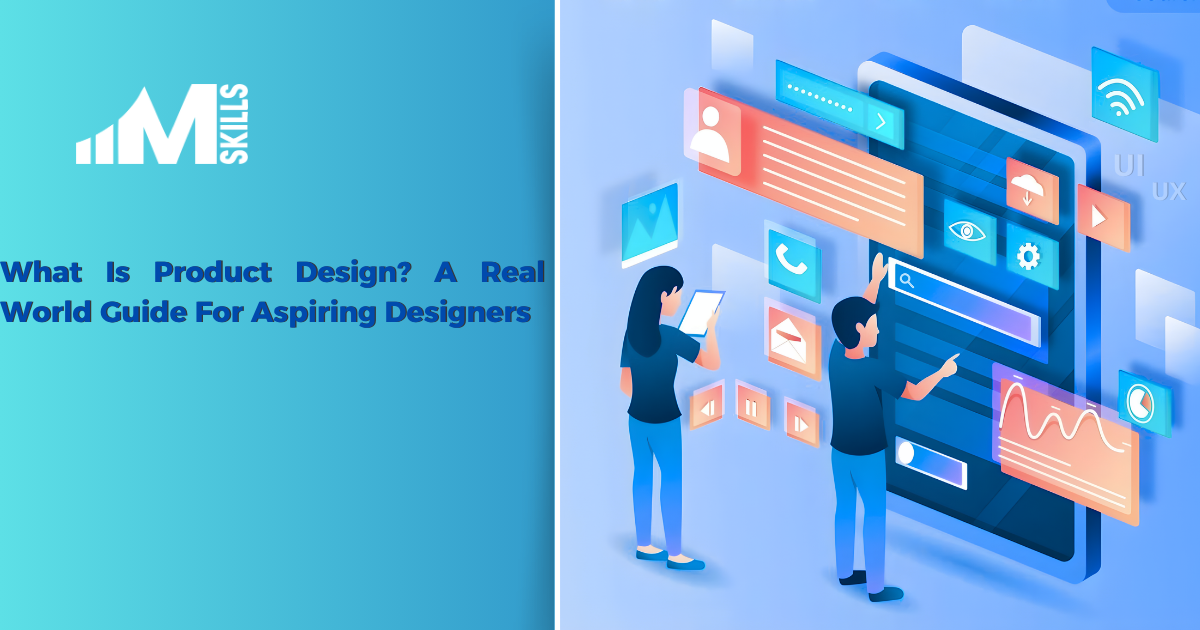
A product designer is responsible for the entire lifecycle of a product. Right from the idea to the execution, a product designer has to supervise everything and be at the top of these things. As a product designer, you will work with developers, marketers, and the main stakeholders of the organization. You have to also make sure that the product aligns with user needs and the vision of the business.
Some of the core responsibilities of a product designer are as follows:
- Research
- Wireframing
- Prototyping
- Testing
- Checking and making iterations wherever necessary
A good product designer does not only aim to make the website, application or a physical product look just visually appealing. They ensure the product works well, and users have an immersive experience while adding value.
Product designers combine the characteristics of design, technology, and business strategy. Hence they are some of the most versatile roles in the design domain.
Check out The Best Product Design Course with Placement assistance and personalized mentorship

Product Design Process: 7 Steps Every Designer Actually Follows
Understanding the product design process is key to knowing what is product design actually involves in the real world. Here's how it typically unfolds:
1. Research
This is the first part and the foundation of the product design process. Designers gather insights about users, competitors, and market trends. Through surveys, interviews, and data analysis, product designers evaluate what the user demands and how to give them the most effective products.
2. Defining the Problem
The next step is to clearly define the problem and think about the solutions deeply. This ensures the team is solving the right issue rather than making ambiguous decisions.
3. Ideation Phase
In this step, the designers brainstorm multiple solutions. Creativity plays a major role here. Teams collaborate and explore different ideas without limitations. Brainstorming results in the best inputs for the product and/or service.
4. Prototyping Phase
Designers create prototypes of the product to check its feasibility. These can range from simple sketches to interactive digital designs.
5. Testing Phase
The prototypes are tested with real users to get feedback. This helps identify usability issues and areas of improvement.
6. Implementation
Once the design is finalized, it is then briefed to the developers to execute.
7. Iteration
Product design has to be continuously developed and made better to cater to the demands of the users. You have to innovate as a designer to not fall behind the competition. Updates are a regular part of product design.
Check out this list of the Top Product designers in the world
To create efficient and high-quality designs, product designers use a variety of tools. These tools help in designing, prototyping, collaboration, and usability testing.
Some popular product design tools include:
- Figma is widely used for UI design for how convenient it is .
- Adobe XD is for designing and prototyping user interfaces.
- Sketch is very popular among Mac users for its design capabilities. It is also easy and simple to use.
- Spline helps with interactive and 3D designs.
- Miro is useful for brainstorming and visual collaboration
- Notion is great for documentation and team tasks and collaborations
Choosing the right product design tools depends on the project requirements and team preferences. Most designers use a combination of the above-mentioned tools.
If you’re looking to enroll in professional online courses then IIM SKILLS is here to offer the best courses with placement. Here are:
Product Design Courses
If you are interested in becoming a product designer, enrolling in product design courses can be a great starting point. These courses help you learn both theoretical concepts and practical skills.
Many online platforms offer a range of courses for beginners as well as intermediates. Topics include design thinking, user research, wireframing, prototyping, and usability testing.
If you’re looking to upgrade your skills in 2026, then here are some IIM SKILLS Master Courses you should go for:
Top 3 Product Designing Courses
If you're just starting out and asking yourself what is product design as a career, a structured course is one of the best ways to build job-ready skills fast. Here are the top three options:
1. IIM SKILLS Product Design Course
IIM SKILLS is a reputed ed-tech platform offering a wide range of professional courses. The product design course is ideal for beginners who want hands-on, job-ready training.
The course fee is INR 49900+ Taxes. You have more than 170 hours of training and 2 month internship included.
It covers product design concepts, user research, and tools like Figma, Miro. Notion along with real-world projects and great placement support.
2. Coursera Product Design Courses
Coursera has an excellent range of product design courses from top universities and companies. The product design and UX/UI Fundamentals by Microsoft is a top course on the platform. It is a beginner's course with the duration up to 3 months.
3. Udemy
Udemy is another very coveted online platform for product design courses. Students can choose affordable programs. They come wish certifications and lifelong access to the content. The fee varies with offers given and can range from INR 400 - INR 3k.
Real-World Product Design Examples to Learn From
Understanding product design examples can help you grasp how theory translates into practical real life solutions.
A great example is Swiggy. The design ensures users can browse menus, place orders, and track deliveries very conveniently. The app is very visually appealing and navigation is easy with great UX writing.
Product Designer vs UX Designer- What’s the Difference?
You might wonder what is the difference between a product designer and a UX designer. While the roles overlap, there are some key differences.
A UX designer focuses specifically on user experience. Their main goal is to make products easy and enjoyable to use.
A product designer, on the other hand, has a more elaborate role. They not only handle user experience but also consider business goals, branding, and product strategy.
Simply put, all product designers work on UX, not vice versa.
If you’re looking to know more about UI/UX Design, then you should check out our other blogs:
Why Product Design is Important for Business today?
In a competitive market, what is product design if not a business advantage? A well-designed product improves user satisfaction, boosts engagement, builds brand trust, and drives long-term retention. Poor design, on the other hand, can cost you users and revenue, that too fast.
A Good design builds trust as well. This helps in long term association with the consumer.
What Skills are Required to Become a Product Designer?
To excel in product design, you need a mix of technical and soft skills.
You should have a strong understanding of design principles and user psychology. An incisive knowledge of design tools is essential for creating prototypes and interfaces.
Problem-solving skills are the most essential. Communication skills are equally important, as you need to collaborate with different teams. You also have to adapt to the changes in the domain since product design field is extremely dynamic.
Career Opportunities in Product Design
If you take up product designing, you can work as a product designer, UI designer, UX researcher, interaction designer, product manager and more.
Every sector today requires product designers. E-commerce, healthcare, finance, food, hospitality industry everyone needs superior product designs.
FAQs
1. Define product design in simple terms?
Product design is the process of creating products meant to solve user problems. They also have to be efficient and solve real user issues.
2. What are the main stages of the product design process?
The main stages include research, problem definition, ideation, prototyping, testing, implementation, and iteration.
3. What is the difference between product design and product development?
Product design is about planning how a product will appear and how it will work. Product development is all about building, testing, and launching that product successfully.
4. How to measure the success of a product design?
You measure success by the reaction of the users. That is the main thing in product design. User reactions help you gauge how efficiently the product solves their problem, and how it performs in terms of engagement, retention, and revenue.
5. Are product design courses necessary to become a designer?
No, it is not mandatory totally. However, product design courses can help you learn the most essential skills. You get to build a portfolio with assistance, and probably land your first job through placement assistance.
Conclusion
Product design combines creativity, technology, and strategy to create useful and meaningful products. Now that you understand what is product design, it is clear why businesses are in need of exemplary product designers today.
There is a high demand for individuals who have the qualities of design, critical thinking and leadership skills. Let us know what you think of the career prospects of product design in the future.
If you’re someone who’s looking to upskill, then IIM SKILLS is the right platform to learn Best Online Courses with Gen AI.