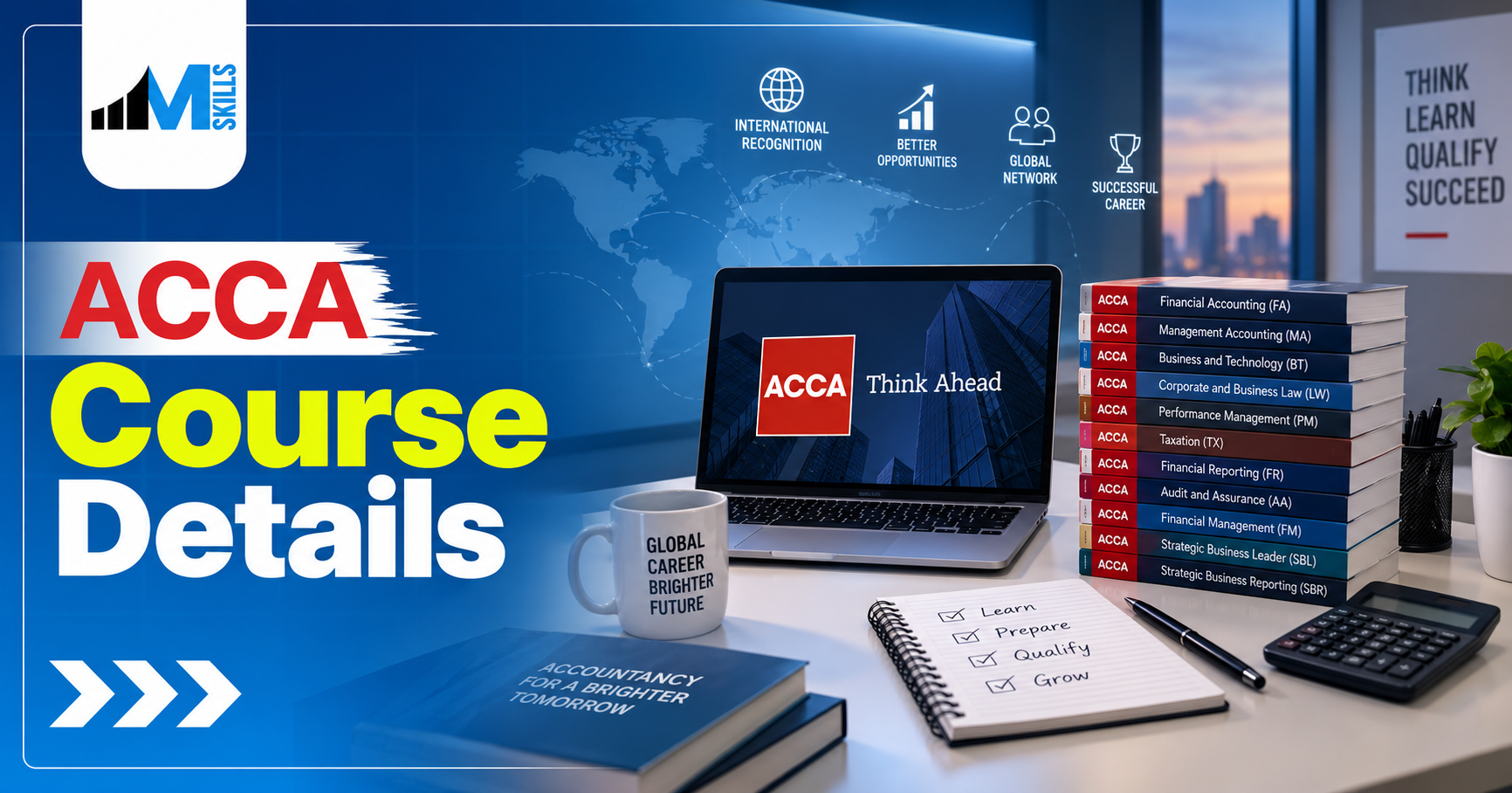
- Eligibility: You can pursue ACCA after Class 12 if you meet the applicable entry requirements.
- Structure: The qualification is organised into Applied Knowledge, Applied Skills and Strategic Professional levels.
- Exams: You can complete up to 13 exams, although exemptions may reduce the number you need to sit.
- Duration: The exam component can potentially be completed in about 2 years, while ACCA membership also requires relevant practical experience.
- Pass mark: The pass mark for ACCA exams is 50%.
- Cost: Total ACCA cost varies with registration, subscription, exam entry, exemptions and study route.
What is the eligibility Criteria for ACCA Course
ACCA is challenging but not very hard to crack. Students who have completed their Class 12 education can start with the course. However, they must meet minimum mark requirements in subjects like Mathematics and English.
So when it comes to the ACCA course eligibility criteria, Graduates from commerce backgrounds might get some exemptions because they are already in related educational fields.
The exemptions can be for certain exams depending on their academic qualifications. Even professionals like CAs and MBAs can pursue ACCA. It helps to gain global exposure and improve their career prospects.
ACCA Course Details: What Is the Structure of the ACCA Course
The ACCA Course is divided into three levels to give you incisive training in different components. Each of these levels has been carefully designed to build a strong foundation. Once the basics are covered, you gain deep insight into advanced knowledge and strategic thinking.
The first level is on basic accounting principles. This ensures that students understand core financial concepts.
The second level builds on this foundation. This level introduces more complex topics such as performance management and taxation.
The final level emphasizes strategic decision-making and professional skills. At this point, students are expected to apply their knowledge in real-world scenarios. This helps in making them industry-ready.
The course also includes an ethics module, which plays a crucial role in shaping responsible finance professionals.

ACCA Subjects and Curriculum
The ACCA syllabus covers accounting, finance, taxation, auditing, financial reporting, business law, and strategic management. The qualification is structured across three levels: Applied Knowledge, Applied Skills, and Strategic Professional.
ACCA Course Subjects
13 required papers across 3 levels
List of all 15 ACCA papers with code, name, level and whether each is compulsory or optional| Code | Paper | Level | Requirement |
|---|
| Applied Knowledge · 3 papers |
| BT | Business and Technology | 🎓 Applied Knowledge | Compulsory |
| MA | Management Accounting | 🎓 Applied Knowledge | Compulsory |
| FA | Financial Accounting | 🎓 Applied Knowledge | Compulsory |
| Applied Skills · 6 papers |
| LW | Corporate and Business Law | 🎓 Applied Skills | Compulsory |
| PM | Performance Management | 🎓 Applied Skills | Compulsory |
| TX | Taxation | 🎓 Applied Skills | Compulsory |
| FR | Financial Reporting | 🎓 Applied Skills | Compulsory |
| AA | Audit and Assurance | 🎓 Applied Skills | Compulsory |
| FM | Financial Management | 🎓 Applied Skills | Compulsory |
| Strategic Professional — Essentials · 2 papers |
| SBL | Strategic Business Leader | 🎓 Strategic Professional | Compulsory |
| SBR | Strategic Business Reporting | 🎓 Strategic Professional | Compulsory |
| Strategic Professional — Options · choose 2 of 4 |
| AFM | Advanced Financial Management | 🎓 Strategic Professional | Optional · 2 of 4 |
| APM | Advanced Performance Management | 🎓 Strategic Professional | Optional · 2 of 4 |
| ATX | Advanced Taxation | 🎓 Strategic Professional | Optional · 2 of 4 |
| AAA | Advanced Audit and Assurance | 🎓 Strategic Professional | Optional · 2 of 4 |
At the Strategic Professional level, students complete the two Essentials exams and choose two Options exams. This means the current ACCA Qualification consists of up to 13 exams, although the number of exams a student needs to take can be lower if they receive exemptions based on previous qualifications.The Applied Knowledge and Applied Skills exams build the technical foundation needed for a career in accounting and finance, while the Strategic Professional exams develop advanced technical, professional and strategic skills. ACCA also includes an ethics component and requires relevant practical experience to become an ACCA member.
If you are looking to upgrade your skills further ahead in another field, you can also explore Data Science Master Course
The ACCA Qualification uses different exam formats across its three levels: Applied Knowledge, Applied Skills, and Strategic Professional. The exact question structure varies by paper, but the pass mark for all ACCA Qualification exams is 50%
ACCA Exam Format at a Glance
| ACCA Level | Exams | Exam Format | Pass Mark |
|---|
| Applied Knowledge |
BT
MA
FA
| Computer-based exams with compulsory questions | 50% |
| Applied Skills |
LW
PM
TX
FR
AA
FM
| Computer-based exams with objective and longer-form questions, depending on the paper | 50% |
| Strategic Professional |
SBL
SBR
+2 Options
| Computer-based exams with compulsory questions and professional skills assessment | 50% |
What Is the Pass Mark for ACCA?
The ACCA pass mark is 50% for every examination. This article also explains how the pass mark differs from the overall pass rate. Students do not need to score 50% in every individual section of an exam; the requirement is to achieve the overall pass mark for the examination.
At the Strategic Professional level, exams also assess professional skills alongside technical knowledge. Students complete the two Essentials exams and choose two of the four Options exams.
Quick Answer: To pass an ACCA exam, you need to score 50% or above. The qualification includes different question formats across its levels, so candidates should check the individual syllabus and study guide for the exact structure of each paper.
What is the Duration of the ACCA Course
The time required to complete the ACCA Qualification depends on your study pace, exam progress, and any exemptions you receive from ACCA. The ACCA exams can be completed in as little as two years, but becoming an ACCA member requires a minimum of 36 months of relevant practical experience. This practical experience can be gained before, during, or after completing your exams.
ACCA Course Duration at a Glance
Factor | Typical Requirement |
ACCA exams | Can be completed in as little as 2 years |
Practical experience (PER) | Minimum 36 months of relevant supervised experience |
Ethics and Professional Skills | Required before ACCA membership |
Exemptions | May reduce required exams. |
ACCA allows students to enter a maximum of four exams in each exam cycle and a maximum of eight distinct exams in a calendar year. Therefore, a student who progresses without exam failures can potentially complete all the required exams within two years. However, the actual timeframe may be longer depending on study commitments, exam performance, exemptions, and personal circumstances.
Does ACCA Take 3 Years to Complete?
Not necessarily. The exams can be completed in two years, but ACCA membership requires at least 36 months of relevant practical experience in an accounting or finance-related role. The practical experience requirement can run alongside your studies, so you do not necessarily have to wait three years after passing your exams to start or complete your practical experience.
Students can also receive exemptions based on relevant previous qualifications. ACCA exemptions are available for Applied Knowledge and Applied Skills exams, while no exemptions are granted for the Strategic Professional exams. The exact exemptions depend on your previous qualifications and should be checked using ACCA's official Exemption Calculator.
Quick Answer: You can potentially complete the ACCA exams in 2 years, but you need a minimum of 36 months of relevant practical experience and the required Ethics and Professional Skills Module to become an ACCA member.
If you are looking to upgrade your skills further ahead in another field, you can also explore UI UX Design Course offered by IIM SKILLS.
 ACCA Exemptions: Who Can Get Them and How They Work
ACCA Course Details on exemptions are especially useful for students who want to know which exams they may be able to skip. ACCA exemptions allow students to skip certain exams when their previous academic or professional qualifications already cover equivalent knowledge and skills. Exemptions can help students start the ACCA Qualification at the appropriate level and reduce the number of exams they need to complete.
How Many ACCA Exams Can You Get Exempted From?
Under the current ACCA Qualification structure, exemptions can be awarded for the nine exams at the Applied Knowledge and Applied Skills levels. ACCA does not award exemptions for any Strategic Professional exams.
ACCA Level | Papers | Exemptions Available? |
Applied Knowledge | BT, MA, FA | Yes |
Applied Skills | LW, PM, TX, FR, AA, FM | Yes |
Strategic Professional – Essentials | SBL, SBR | No |
Strategic Professional – Options | AFM, APM, ATX, AAA | No |
Who Is Eligible for ACCA Exemptions?
Students with relevant prior qualifications may be eligible for exemptions. ACCA assesses qualifications such as bachelor's degrees, postgraduate qualifications, diplomas, certificates, foundation degrees, and professional qualifications when determining whether previous learning matches the knowledge required for an ACCA exam.
However, the number of exemptions depends on the specific institution, qualification, subjects studied, course content, and graduation or study year. Therefore, students should not assume that every student with the same degree will automatically receive the same exemptions.
Can You Get ACCA Exemptions Based on Work Experience?
No. Work experience does not provide exam exemptions for the ACCA Qualification. Exemptions are awarded based on relevant prior qualifications and learning.
Work experience is instead relevant to the Practical Experience Requirement (PER) that students complete as part of their journey toward ACCA membership.
How to Check Your ACCA Exemptions
The most accurate way to determine your exemptions is to use the official ACCA Exemptions Calculator.
You generally need to provide details such as:
Your educational institution
- Your graduation year or last year of study
- Your qualification or course
- The subjects or modules you completed, where required
- The calculator then shows which ACCA exemptions may be available for your qualification.
Quick Answer: ACCA exemptions can reduce the number of exams you need to take if your previous qualification covers equivalent ACCA content. Up to nine Applied Knowledge and Applied Skills exams may be exempted, while Strategic Professional exams cannot be exempted. Your exact exemptions should always be checked using the official ACCA Exemptions Calculator.
Should You Always Claim an ACCA Exemption?
Not necessarily. An exemption means you can skip an exam, but students should consider whether they already have a strong understanding of the underlying subject.
If your previous qualification is recent and closely related to the ACCA syllabus, accepting an exemption may help you progress faster. If your knowledge of the subject is weak or outdated, studying the material before progressing to higher-level ACCA exams may be beneficial. ACCA also recommends considering your existing knowledge before deciding whether to claim certain exemptions.
What are some of the skills you gain through ACCA?
ACCA helps you develop a wide range of skills. It improves your analytical thinking, problem-solving abilities, and decision-making skills. Students also gain a strong understanding of global financial best practices.
ACCA also puts a lot of emphasis on communication and ethical decision-making. These skills are highly valued by employers and play a key role in career growth. You become skilled and confident enough to handle leadership roles in finance and accounting.
If you are looking to upgrade your skills further ahead in another field, you can also explore the Finance Program offered by IIM SKILLS.
What are some of the good career opportunities after ACCA
ACCA professionals are in high demand across various industries today. They can work as financial analyst, auditors, tax consultants, and finance managers, among other roles. Many MNCs today look for ACCA-qualified professionals because of their global perspective and expertise.
The qualification also opens doors to international careers. ACCA is recognized worldwide. You can work in the UK, UAE, Canada, Singapore and Australia. This global popularity makes ACCA a popular choice for those who aspire to work internationally.
If you are looking to upgrade your skills further ahead in another field, you can also explore the Marketing Program offered by IIM SKILLS.
Why is ACCA preferred over other accounting courses
ACCA gains its prominence because of its international allure and flexible learning methodology. CA is highly respected in India, but ACCA has a more global approach. It has international accounting standards and practices. This makes it suitable for multinational roles.
Another advantage is the exam structure. ACCA students take exams at their own pace, which reduces pressure and provides more flexibility. This makes it easier for students to balance studies with work or other studies that they might be pursuing.
Why Should You Choose ACCA?
ACCA is an excellent choice for individuals who want a globally recognized qualification in finance. It provides a great finance and accounting foundation. But it does not just end there, You gain superior strategic and analytical skills. The flexibility of the course allows students to learn at their own pace, making it suitable for different lifestyles.
The qualification also enhances career opportunities with various industries and countries that require sharp finance professionals. With the growing demand for skilled finance enthusiasts, ACCA continues to be a valuable qualification to pursue for 2026 and beyond.
Industry Relevance With Global Recognition of ACCA
One of the strongest points in favour of pursuing ACCA is its global recognition and importance across industries. ACCA being accepted in 180+ countries is a glowing testament to its international credentials. This global popularity helps professionals to work worldwide without needing additional certifications. This is a major advantage in today’s job market.
ACCA is aligned with international accounting standards like IFRS. It is widely used by MNCs. This makes certain that students are trained in practices that are relevant worldwide.
The course is curated in collaboration with industry experts so that the syllabus remains updated with current market needs and trends. So, as an ACCA student, you are not just learning theory but are being prepared for real-world challenges from the start.
ACCA professionals are valued greatly in financial consulting, risk management, and business strategy. Their ability to combine technical expertise with strategic thinking makes them highly coveted in the industry. Soft skills development is an absolute necessity to success in any field, and ACCA professionals develop that as part of the curriculum.
In a competitive professional landscape, having a qualification that is recognized globally and aligned with industry demands gives ACCA students an edge over their competition. It enhances employability and provides the flexibility to explore diverse career paths across different industries worldwide.
If you are looking to upgrade your skills further ahead in another field, you can also explore the Writing Program offered by IIM SKILLS.
ACCA Course Details: What Are ACCA Course Fees and Salary
The total cost of the ACCA Qualification depends on several factors, including registration, annual subscription, exam entry fees, exemption fees, the number of exams taken, and optional tuition fees. ACCA fees can also change over time, so students should check the latest official fee schedule before registering or booking an exam.
ACCA Fee Structure 2026
Fee Component | 2026 Fee | What It Covers |
Initial registration | £89 | One-time fee when registering as an ACCA student |
Annual subscription | £140 | Annual fee to maintain active student status |
Applied Knowledge exemption | £86 per exemption | Charged for each Applied Knowledge exam exemption awarded |
Applied Skills exemption | £114 per exemption | Charged for each Applied Skills exam exemption awarded |
Ethics and Professional Skills Module | £83 | Required module before starting Strategic Professional exams |
Applied Skills exam entry | £151 standard entry* | Fee per exam for December 2026 standard entry |
Strategic Business Leader (SBL) | £268 standard entry* | December 2026 standard entry |
Strategic Business Reporting (SBR) | £191 standard entry* | December 2026 standard entry |
Strategic Professional Options | £191 per exam standard entry* | AFM, APM, ATX or AAA |
Exam entry fees vary by exam session and entry deadline. Late-entry fees are significantly higher. Applied Knowledge exams may have different pricing depending on whether the exam is taken as an on-demand computer-based exam or through an approved exam centre.
What Is Included in the Total ACCA Cost?
The total ACCA cost is not limited to examination fees. Students may need to budget for:
Initial ACCA registration
Annual student subscription
Exam entry fees
Exemption fees, if applicable
Ethics and Professional Skills Module
Study materials
Tuition fees, if studying with an ACCA Approved Learning Partner
Additional costs associated with resitting exams
Tuition is a separate expense and varies between learning providers. Students should check directly with their chosen ACCA Approved Learning Partner for current tuition fees.
How Much Does ACCA Cost in India?
There is no single fixed total cost for every ACCA student in India. The final amount depends on how many exams you need to take, whether you receive exemptions, how quickly you complete the qualification, how many exam attempts you require, and whether you choose paid tuition.
For example, a student with several exemptions may need to take fewer exams but may still have to pay exemption fees. A student without exemptions may need to pay exam entry fees for more papers. Students who take longer to complete the qualification may also pay annual subscription fees for additional years.
Therefore, the most accurate way to estimate your ACCA cost is to calculate the applicable registration, subscription, exemption and examination fees for your individual situation rather than relying on a single average figure.
Quick Answer: The ACCA cost in India includes registration, annual subscription, exam fees, possible exemption fees and the Ethics and Professional Skills Module. In 2026, ACCA's India fee schedule lists £89 for initial registration and £140 for the annual student subscription. The final cost depends on your exemptions, exam attempts, study duration and tuition choice.
Are ACCA Tuition Fees Included in ACCA's Official Fees?
No. Tuition fees paid to a coaching institute or ACCA Approved Learning Partner are separate from ACCA's own registration, subscription, exemption and examination fees.
Students who choose self-study may avoid tuition fees, while students who enrol with a learning provider will have an additional tuition cost. These fees vary by provider and should be checked directly with the institute.
Why Does the Total ACCA Cost Vary From Student to Student?
The final cost can vary because:
Exemptions: Students may need to take fewer exams but can have exemption fees.
Exam attempts: Retaking an exam creates additional examination costs.
Completion time: Annual subscription fees apply while maintaining active student status.
Entry timing: ACCA uses different exam-entry pricing depending on the entry deadline.
Study method: Self-study and paid tuition have different costs.
Exam arrangement: Certain exam arrangements can involve additional local charges.
For the most accurate and current amount, students should check ACCA's official Fees and Charges page for India before registering or entering an examination.
If you are looking to upgrade your skills further ahead in another field, you can also explore the Medical Program offered by IIM SKILLS.
Top 5 Best Institutes for ACCA Course
1. IIM SKILLS
IIM SKILLS is a leading institute offering professional training in different disciplines. The institute offers a well-structured ACCA Course that is apt for beginners as well as professionals. You have more than 30 mock tests, recorded sessions, doubt resolution, mentorship support, and career guidance. The course comes with options to choose from. The ACCA course fees vary according to the course you choose.
The details are as follows:
- Knowledge Level - INR 49,900+ Taxes
- Professional level - 99,900+ Taxes
- Skill Level - INR 1,49,900+ Taxes
You have strong post-course support at IIM SKILLS. You can take a demo session and talk to the counsellor at the institute to get a clear idea of what the course covers.
2. Zell Education
Zell Education is next on our list of ACCA Courses. Zell is popular for concept-based teaching and a personalized mentorship approach. It is a pioneer in building strong financial knowledge along with exam preparation, making it popular among serious ACCA enthusiasts. In terms of fees, Zell comes with weekday, weekend and self-paced courses, and the fee varies according to the format you choose. Generally, the fee ranges from INR 52,000 to INR 165000.
3. Imarticus Learning
Imarticus Learning is another institute well-known for providing ACCA training. It provides a career-oriented program that helps you with industry readiness. The institute offers access to study materials, structured learning paths, mock tests, and placement support. The programs generally range between INR 1,50,000 lakhs to INR 3,50,000 lakhs approximately. For a more detailed and accurate fee, connect with them.
4. The Wall Street School
The WallStreet School has a premium ACCA coaching Program that comes with practical finance skills like financial modelling. With 14+ years of experience and more than 11,000 placements, Wall Street School is a coveted institute for ACCA coaching. The fee is available once you request the brochure details. You get scholarship options as well. Some of the features include personalised sessions, access to a WhatsApp group, and tests to evaluate your progress.
5. Xylem Learning
Finally, on our list of the best ACCA institutes is Xylem Learning. Xylem is a new edtech platform popular for its student-centric approach and enthusiasm to impart learning. It is a good choice for students looking for cost-effective learning. The exact course fee is not available on the website as such. But Xylem is known for budget-friendly education. You can get more details on the course by connecting with them through their portal.
FAQs
1. Is ACCA difficult to complete?
ACCA can be a difficult vocation to pursue only if you are not sure or sincere about it. With proper planning, it becomes easier to crack.
2. Can I pursue ACCA after 12th?
Yes, you can start ACCA after completing Class 12. You just have to meet the eligibility criteria.
3. How many papers are there in ACCA?
There are up to 13 papers in total. However, as previously mentioned, you might have exemptions.
4. Is ACCA recognized in India?
Yes, ACCA is very well-recognized in India. It is valued by organizations from all sectors and are a favourite with MNCs.
5. Do I need work experience to complete ACCA?
You do not need work experience to start or sit the ACCA exams. However, relevant practical experience is required, along with the other membership requirements, to become an ACCA member.
For session-based ACCA exams, the official ACCA timetable currently lists the following 2026 exam windows:
| Session | Exam dates | Status |
|---|
| September 2026 | 7–11 September 2026 | Current session |
| December 2026 | 7–11 December 2026 | Upcoming |
Note: ACCA publishes and updates session timetables on its official website. Check the official timetable before booking an exam because individual paper availability can vary by session.
ACCA vs CA: Quick Comparison
| Factor | ACCA | CA |
|---|
| Professional body | ACCA | ICAI |
| Orientation | International accountancy qualification | India-focused professional accountancy qualification |
| Structure | Applied Knowledge, Applied Skills, Strategic Professional + practical experience | Foundation, Intermediate and Final + practical training |
| Best fit | Students targeting international or multinational finance careers | Students targeting India's accounting, tax, audit and professional-practice ecosystem |
For a detailed comparison covering fees, duration, syllabus, pass rates and career scope, read the ACCA vs CA comparison guide.
Continue your ACCA research with these focused guides:
Conclusion
Hope this article has been able to provide you with the necessary information on ACCA course details. The ACCA program is more than just an accounting qualification. It is your ticket to a lucrative global career. It has a comprehensive syllabus, flexible structure, and strong emphasis on practical skills. So, the course gives you a full education on finance.
Whether you are a student starting your journey or a professional looking to upskill, ACCA offers a rewarding and secure career option in the volatile business environment today.
If you’re someone who wants to upgrade their skills in 2026, then IIM SKILLS is here to provide the Best online courses in India.