Advanced Excel, Power BI, Python and Tableau, plus FactSet sample data
12+ live modelling projects, from 3-statement to LBO
Placement support and interview preparation
Top Graduates Hired By
Quick Program Summary
Financial Modelling Course at a Glance
The IIM SKILLS Financial Modelling and Valuation Course is a 5-month program taught in live online classes. Learners build 12+ models, including 3-statement, DCF, LBO, M&A and project finance models, in Excel, and also use Power BI, Python and AI tools. The live Master Program costs ₹49,900 + 18% GST and includes 105 live instructor hours, 30 recorded hours, 165 capstone project hours, a 2-month virtual internship, and placement support; the self-paced version costs ₹29,900 + GST without placement. Zero-cost EMIs are supported via Bajaj Finserv and Northern Arc. Next batch starts: 7th November 2026.
Most Popular • Dedicated Placement Support
Master Program (Live)
₹49,900+ 18% GST (₹58,882 total)
Zero-cost EMIs available with Bajaj Finserv & Northern Arc
Virtual internships are part of IIM SKILLS in-house, non-paid internship programs. Paid internships are offered through partner firms, subject to interview clearance. The stipend may vary depending on the company.
100% Money-Back Guarantee
Not satisfied after the 1st session? Full refund, read our refund policy.
12 modules, from Excel and accounting to DCF, LBO and M&A models, taught by trainers who have worked at PwC, TresVista and Moody's Analytics.
All 12 Modules Available in Full
Skills Acquired:
formula masterydata modellingVBA automationdashboard building
Core Topics:
XLOOKUP and INDEX-MATCH, SUMIFS and COUNTIFS, absolute and relative references, pivot tables, data tables, Goal Seek and Scenario Manager, recording and editing macros
Analyze pre- and post-merger EPS accretion/dilution across deal terms.
Model purchase price allocation (PPA), write-ups, goodwill, and synergies.
Build full transaction balance sheet adjustments and valuation bridges.
View objectives
Live Project 7
IPO Model - Consumer Tech
Ownership & Valuation Modeling
Understand public listing valuation methods and share dilution.
Build a model projecting pre- and post-IPO ownership and cap tables.
Evaluate primary vs secondary share sales and IPO price-range sensitivity.
View objectives
Live Project 8
VC Valuation + Cap Table
Early-Stage Equity & Dilution
Model early-stage company valuation and founder equity dilution.
Build dynamic cap tables with SAFEs, convertible notes, and option pools.
Apply VC valuation methods across multiple progressive funding rounds.
View objectives
Live Project 9
Banking Loan Book Model
Capital Adequacy & Risk Modeling
Understand interest margins (NIM), yield analysis, and loan portfolios.
Model credit risk provisioning, stage 1-3 NPAs, and Basel capital rules.
Evaluate risk-weighted assets and stress-test loan book scenarios.
View objectives
Live Project 10
Oil & Gas Scenario Model
Price-Sensitive Cash Flow Modeling
Model commodity-driven revenue structures under fluctuating benchmark prices.
Build a project cash flow model with depletion, capex, and royalty rules.
Test commodity price shocks, breakeven thresholds, and reserve NPVs.
View objectives
Live Project 11
Football Field + Output Dashboard
Valuation Range Visualization
Synthesize DCF, public comps, precedent transactions, and 52-week highs.
Build a professional football-field valuation chart from multiple model outputs.
Create pitch-book ready summary visual decks for investment committees.
View objectives
Live Project 12
Feasibility Study – Infra/Manufacturing
Multi-Year Capital Planning
Learn to assess commercial, technical, and regulatory project feasibility.
Build a multi-year capex, working capital, margin, and payback model.
Present go/no-go investment decisions to stakeholders with sensitivity tables.
View objectives
See all 12 sector models in the brochure
Get the full case-study repository details, model sample structures, and assignment guidelines.
Industry Tech Stack
Tools You Will Learn
Master the core spreadsheets, financial intelligence platforms, and modern AI tools used every day across investment banking and corporate finance.
Core Tools
• 2 tools
Excel
PowerPoint
Analysis & Visualization
• 5 tools
Power BI
Tableau
Python
Pandas
NumPy
Market Data & APIs
• 3 tools
FactSet
S&P Global
Alpha Vantage
AI & Productivity
• 3 tools
ChatGPT
Gamma
Notion
* Note: FactSet and S&P Global are covered through guided live demonstrations of sample datasets (individual institutional logins are not provided).
Want the complete curriculum & tools guide?
Download the complete technical tools breakdown and sample model files.
Certificates You Earn
Earn industry-recognized credentials: Master Certification aligned with NHEQF standards and Medhavi Skills University, 4 capstone project credentials, and a 2-month internship certificate.
Master Certification
01
Stage 01
IIM SKILLS Master Certificate
Master Certification
Curriculum aligned with National Higher Education Qualifications Framework (NHEQF) standards. Jointly accredited through Skills Training Partnership with Medhavi Skills University (MSU).
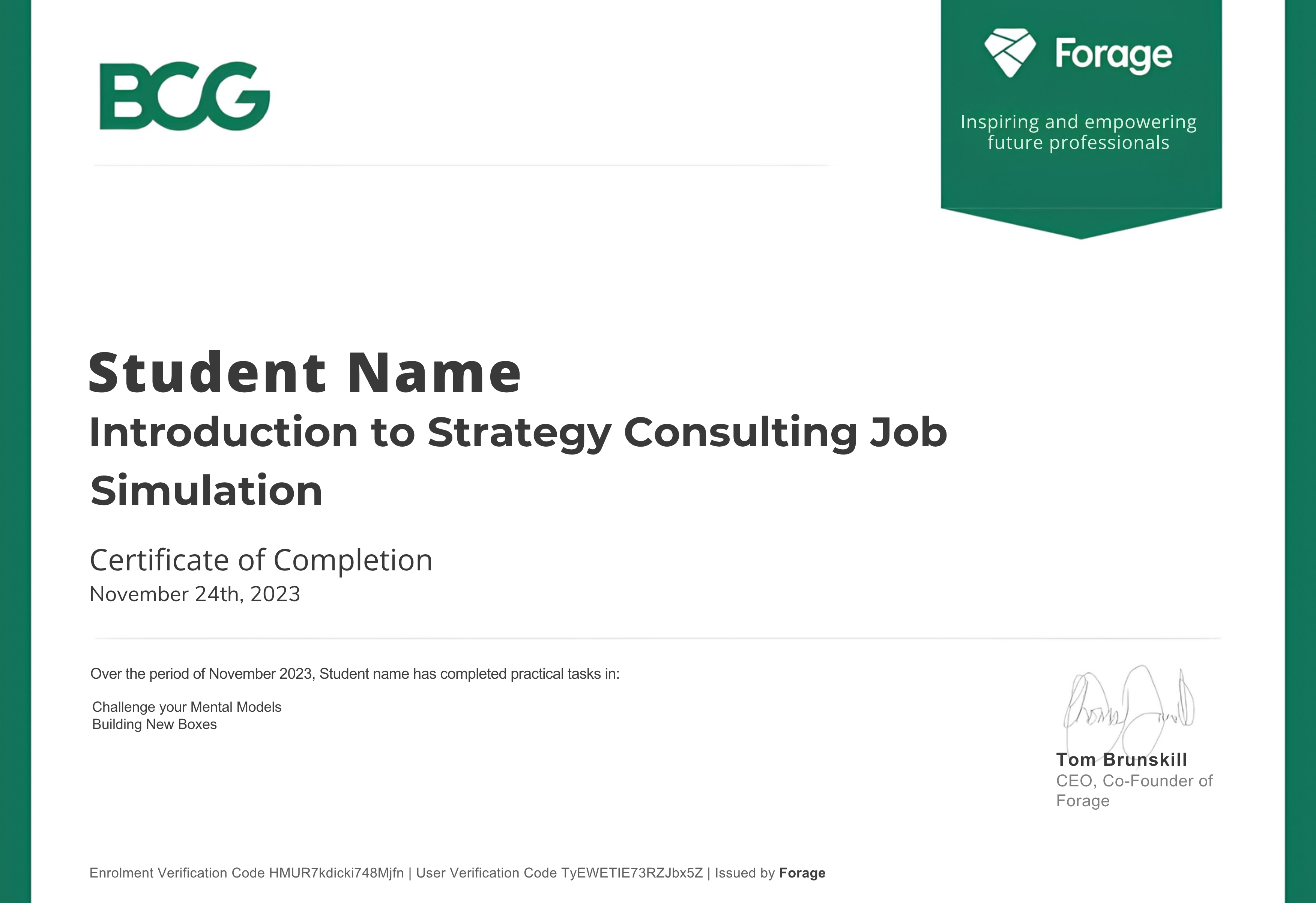
Job-simulation completion certificates from partner programs powered by Forage across global institutions: Goldman Sachs, Bank of America, Fidelity International, and BCG.
2-Month virtual internship certificate to validate your practical modeling experience and work readiness.
Recognition:
2 MonthsPractical Work
Verified
Master Certification
IIM SKILLS Master Certificate
Curriculum aligned with National Higher Education Qualifications Framework (NHEQF) standards. Jointly accredited through Skills Training Partnership with Medhavi Skills University (MSU).
Job-simulation completion certificates from partner programs powered by Forage across global institutions: Goldman Sachs, Bank of America, Fidelity International, and BCG.
"The 4-day financial modeling workshop by Varun Sir gave me great insights into real-world valuation."
Amisha
"The internship program and course structure are highly impressive."
Mannat
"The course is well-planned with good placement support."
Manish Karn
"Pursuing this course was the best decision for my career growth"
Akshita
Credit Analyst
Verified Alumni
Akshita
"The 4-day financial modeling workshop by Varun Sir gave me great insights into real-world valuation."
I attended a 4-day financial modeling workshop mentored by Varun Sir. His interactive teaching style and practical case studies built deep clarity on model architecture, valuation, and financial analysis. The practical training helped me transition smoothly into my role as a Credit Analyst. I strongly recommend IIM SKILLS to anyone looking to build a serious career in finance.
What Recruiters Say About IIM SKILLS Learners
Direct feedback from hiring managers and senior finance leaders who recruit directly from our programs.
BARCLAYS
Onkar Yadav
AVP, Barclays
"I have been hiring from IIM SKILLS for a while and the process has been very smooth. The students bring in real skills and institutional-grade modeling talent to our team."
Ernst & Young
Mohit Budhiraja
Assistant Manager, EY
"IIM SKILLS is always my first choice for hiring finance professionals. I have personally interviewed their students and find them highly qualified for our analyst roles."
The Algebra Group
Ishant Ghai
Vice President, The Algebra Group (trainer's firm)
"What makes analysts standout is their technical as well as presentation skills. I get to see both when I hire from IIM SKILLS. They have been our preferred partner for all hiring needs."
Core Knowledge
What Is Financial Modelling?
What Is Financial Modelling?
Financial modelling is building a spreadsheet, usually in Excel, that links a company's income statement, balance sheet and cash flow to forecast its performance and estimate its value. Analysts use these models to value companies (DCF, comparables), judge investments and loans, and plan budgets.
Common types include the 3-statement model, DCF valuation, LBO, M&A accretion/dilution and project finance models. Financial analysts, equity research and investment banking analysts, FP&A teams, credit analysts and consultants build them every day.
What are the key objectives of the Financial Modelling Course?
Master advanced Excel formulas, lookup logic, and dynamic sensitivity tables.
Build integrated 3-statement models from raw corporate annual reports.
Perform valuation using DCF, trading comparables, and precedent transaction methods.
Construct complex transaction models including LBO buyouts, M&A accretion/dilution, and project finance.
Visualize financial insights with Power BI dashboards and automate workflows with Python.
Complete 12+ live sector models to create an interview-ready portfolio.
Who is eligible for the Financial Modelling Course?
The baseline eligibility is 10+2 from a recognised board with 50% or above aggregate. A graduate degree in commerce, finance, mathematics, economics, or engineering is beneficial but not required.
Designed as a practical, beginner-friendly program: all modeling concepts are taught step-by-step from a blank Excel sheet.
Recommended prerequisite background:
Basic familiarity with Excel and spreadsheets.
Foundational understanding of revenue, costs, and profit.
Analytical mindset and interest in investment analysis.
Why Learners Choose IIM SKILLS
1
100% Blank-Sheet Modeling
Every model is built step-by-step with the trainer from a blank Excel worksheet—no pre-filled formulas or fill-in-the-blank templates.
2
Trainer Pedigree
Faculty bring 10+ years of institutional valuation experience from PwC, TresVista, and Moody's Analytics.
3
2-Month Virtual Internship
Includes a guaranteed 2-month virtual internship to apply models to real corporate data and earn practical credentials.
4
Modern Finance Stack
Comprehensive training across Excel, Power BI, Python (Pandas/NumPy), Tableau, and ChatGPT for analysts.
5
Transparent Placement Support
Dedicated placement cell, resume and LinkedIn review, mock technical interviews, and access to 550+ hiring partners globally.
6
Lifetime Learning Access
Unlimited lifetime access to updated LMS session recordings, financial model templates, and future batch refresher access.
2-Month Internship Included
12+ Live Industry Models
Financial Modelling Salary in India
Financial Analysts with financial modelling skills in India earn an average base salary of ₹5.8 LPA (182 profiles), starting at ₹4.5 LPA at entry level and reaching ₹11.9 LPA in mid-career roles (Source: Payscale).
Average base salary for Financial Analysts with financial modelling skills in India (182 profiles, 15 Sep 2026), scaling to ₹11.9 LPA mid-career and up to ₹20 LPA in specialized investment banking and FP&A tracks.
* Note: “₹2m” on Payscale means ₹20 lakh. Figures sourced from individual Payscale India role reports (small samples, 8–32 profiles). Payscale's experienced tier (10–19 yrs) averages ₹14.7 LPA based on limited sample data (11 profiles).
Top Financial Hubs in India
MumbaiCapital Markets Hub
India’s capital markets hub; largest volume of investment banking, equity research, and institutional treasury openings.
BengaluruTech & VC Finance
Focus on tech corporate FP&A, venture capital analysts, and startup finance.
Delhi NCRAdvisory & Infra
Strong demand across boutique M&A advisory, credit rating agencies, and infrastructure finance.
Hyderabad & PuneGCCs & Analytics
Global Capability Centres (GCCs) and offshore analytics hubs for US/European investment banks.
Want to benchmark your profile?
Speak with our career coaches to see how our live projects, internship, and placement assistance map to higher starting packages.
THE P.L.A.C.E. DELIVERY SYSTEM
Why Learners Choose IIM SKILLS
Five things built into every batch.
P
Practical
Tool-driven training
L
Live
Interactive modeling
A
Applied
Sector-specific cases
C
Career
Portfolio & Pitching
E
Ecosystem
550+ Hiring Partners
Features
IIM SKILLS
Typical short course
Training Delivery
Practical, tool-driven classes: you build every model from a blank sheet
Theory-heavy lectures (6–10 weeks, 60–120 hours)
Excel & Modeling
Model structure and error checks, without templates
Filling in pre-made 'fill-in-the-blank' templates
Industry Exposure
Sector-specific models (FMCG, E-comm, Real Estate)
Generic, outdated case studies with no context
Work Experience
2-month virtual internship included (in-house and unpaid; paid roles through partner firms after interview)
Internship not included
Placement Support
Direct access to 550+ Active Hiring Partners
Placement fee may be extra or basic job alerts only
Finish with a portfolio of 12+ models
Join 55,000+ learners trained since 2015.
LinkedIn Ready
Build Your Portfolio
Companies need practical skills, not just certifications. Our training includes 12+ hands-on projects that help you build an impressive modeling portfolio that proves your technical expertise to recruiters.
IIM SKILLS Master Course
Master the Art of Financial Modeling
Certified training for careers in investment banking, equity research and corporate finance.
Purchase price allocation, goodwill creation, and combined balance sheet adjustments.
Infra / Energy
Renewable Project Finance
Non-recourse cash flow modeling with debt sculpting, DSCR metrics, and equity returns.
How to Enrol
Follow four simple steps to confirm your seat, access the learning portal, and start building financial models.
01
01
Apply on website
Fill up the quick registration form to initiate your batch enrolment process.
02
02
Counselor Evaluation
Our counselor verifies your eligibility, academic background, and program outcome expectations.
03
03
Select Batch & Enrol
Choose live weekend or self-paced batch. Enrolment is required at least 3 days prior to batch start for timely LMS provisioning.
04
04
Start your journey
Access your LMS portal, financial model templates, sample datasets, and begin live mentor-led classes.
Frequently Asked Questions
Financial Modelling Course FAQs
30 verified answers on curriculum modules, tools, program fees, batch schedules, eligibility, alumni salaries, and certifications.
What is the IIM SKILLS Financial Modelling Course?
It is a 5-month online program that teaches you to build financial models and value companies from scratch in Excel. You learn financial statements, ratio analysis, forecasting, DCF and comparable-company valuation, plus Power BI, Python and AI tools. The course includes 12+ industry projects, a 2-month virtual internship and, on the live plan, placement support through 550+ hiring partners.
What does the financial modelling curriculum cover?
The curriculum has 12 modules: MS Excel, accounting concepts and financial statements, ratio and KPI analysis, MS PowerPoint, technicals of financial modelling, types of financial models, valuation, Power BI, Python, Tableau, ChatGPT and AI, and live model-building classes. It moves from Excel and accounting basics to three-statement, budget, 13-week cash flow, project finance, LBO and M&A models, valued with DCF, comparables, precedent transactions and NAV.
Which tools will I learn in this course?
You will learn Advanced Excel, PowerPoint, Power BI, Tableau and Python with Pandas and NumPy. The course also covers ChatGPT and Gen AI tools, Gamma for presentations and Notion for research notes. For market data, it introduces S&P Global, FactSet and the Alpha Vantage API through guided live demonstrations with sample datasets (individual institutional logins are not provided).
What projects will I work on?
You build 12+ real-world models: a three-statement model, a SaaS subscription model, a real estate waterfall model, an LBO buyout, renewable-energy project finance, an M&A accretion/dilution model, an IPO model, a VC cap table, a banking loan book model, an oil and gas scenario model, a football-field valuation dashboard and an infrastructure feasibility study. Together they form a portfolio you can show recruiters.
How long is the course, and what is the class schedule?
The course runs for 5 months, delivering 300+ total learning hours broken down into 105 live instructor-led hours, 30 LMS/recorded lecture hours, and 165 capstone project hours (practical projects, quizzes, and real-world case studies). Weekend cohorts meet on Saturday and Sunday from 10:00 AM to 12:00 PM IST, with complete session recordings and flexible batch rescheduling available.
Are the classes live or recorded?
Both options exist. The Live Master Program includes 5 months of live instructor-led training, session recordings, and lifetime LMS access. The Self-Paced plan provides recorded lectures with 1-year LMS access. All doubt-clearing sessions are 100% online and interactive, accompanied by weekly project evaluations and monthly webinars with industry mentors.
Who teaches the course?
The course is taught by finance practitioners. Mentors include Varun, Founder, The Algebra Group (with prior experience at PwC, TresVista and Moody's Analytics); Tushar Bharadwaj (Manager - M&A, Cube Highways; Ex-EY and Macquarie); Shubham Sharma (financial modelling; Ex-JPMorgan Chase); Vikas Khurana (Senior Manager, Grant Thornton Bharat LLP); Rajkumar Arora (M&A, Wodehouse Capital; Ex-SG Analytics); Dr. Swati Narula (finance and accounting; VIPS); Vanthana Baburao (Vice President at IIM SKILLS · Corporate Finance & Data Analytics); and Vijayalakshmi M. (data visualisation; Senior Data Analyst, Vodafone). IIM SKILLS was founded in 2015 by Vaibhav Kakkar.
Varun
Founder, The Algebra Group · Ex-PwC, TresVista & Moody's
What is the fee for the IIM SKILLS Financial Modelling Course?
The Live FMVA plan costs ₹49,900 + 18% GST (₹58,882 in total), and the Self-Paced plan costs ₹29,900 + 18% GST (₹35,282 in total). Financial modelling courses in India generally cost between ₹30,000 and ₹80,000, depending on live teaching, projects and placement support. Zero-cost EMIs are available with approved financing partners including Bajaj Finserv and Northern Arc.
What is the difference between the Live and Self-Paced plans?
Choose Live Master Program if you want placement support, live interaction, and an internship; choose Self-Paced if you mainly need the skills and prefer learning on your own schedule.
Feature
Master Program (Live)
Self-Paced
Fee
₹49,900 + 18% GST
₹29,900 + 18% GST
Classes
5 months of live training
Recorded lectures
Course delivery
300+ hours
300+ hours
Certificates
6
5
LMS access
Lifetime
1 year
1:1 mentorship
Yes
No
WhatsApp community
Yes
No
2-month virtual internship
Yes
No
LinkedIn optimisation and mock interviews
Yes
No
24x7 support
Yes
No
Placement support
Yes
No
Live Master ProgramRecommended
₹49,900 + 18% GST
5 Months live training (300+ total hrs)
Lifetime LMS access & session recordings
2-Month virtual internship included
Placement Support: 550+ hiring partners
1:1 Mentorship & dedicated WhatsApp group
6 Industry Certifications
Self-Paced ProgramSelf-Study
₹29,900 + 18% GST
Recorded HD lectures (300+ total hrs)
1-Year LMS access
5 Industry Certifications
No virtual internship
No placement support
No 1:1 mentorship or batch group
Can I pay the course fee in EMIs?
Yes. You can pay in 12 zero-cost interest-free EMIs through our approved financing partners, Bajaj Finserv and Northern Arc. In addition, a flat 10% group discount applies when three or more candidates register together.
Is there a refund if the course is not right for me?
Yes. If you are not satisfied after the first session, you can claim a full refund under the IIM SKILLS refund policy. Read the policy at iimskills.com/refund-policy before enrolling for the exact conditions and timelines.
What is the admission process?
Admission takes four steps: submit your application on the website, complete a 1-on-1 profile evaluation with an admissions counsellor (where they review your 10+2 / graduation qualifications, eligibility, and target career outcomes), select your preferred batch schedule, and complete enrolment. We require advance registration at least 3 days prior to batch commencement to ensure timely LMS portal provisioning and pre-reading distribution. There is no entrance exam.
Is the internship paid?
The 2-month virtual internship included in the course is an unpaid, in-house IIM SKILLS program. Paid internships are offered separately through partner firms, subject to clearing their interview, and the stipend varies by company. Every learner who completes the internship receives an internship certificate.
Who is eligible for the Financial Modelling Course?
The baseline eligibility is 10+2 from a recognised board with a minimum 50% aggregate score. The course welcomes college students, fresh graduates, and working professionals. While a background in commerce, mathematics, economics, or engineering (B.Com, BBA, B.Tech, CA, CFA, MBA) is common, candidates from any discipline meeting the 50% 10+2 threshold can join because the curriculum builds financial concepts from the ground up.
Can I join without a commerce or finance background?
Yes. Non-commerce graduates, engineers, and career switchers can join as long as they meet the baseline 10+2 with 50%+ aggregate requirement. The first modules teach accounting concepts, financial statements, and Excel fundamentals from scratch. Comfort with numbers matters more than your prior academic stream, and mentors provide extra guidance during foundational classes.
Do I need prior work experience in finance?
No. The course is built for beginners as well as professionals who want to upskill. It starts with fundamentals and moves step by step to advanced modelling and valuation. Freshers gain practical experience through the 12+ projects and the 2-month virtual internship.
Is financial modelling difficult to learn?
Financial modelling feels hard at first because it combines accounting, Excel and valuation logic. It becomes manageable with structured, hands-on practice: most learners struggle with linking the three statements, then speed up once that clicks. Live doubt-clearing sessions and weekly projects at IIM SKILLS are designed to get you past that stage.
Can working professionals take this course?
Yes. Weekend batches run on Saturday and Sunday mornings, recordings cover any missed class, and rescheduling is flexible for working professionals. Plan for the two weekend sessions plus a few hours of project work each week over the 5 months.
What jobs can I get after a financial modelling course?
Common roles include financial analyst, equity research analyst, investment banking analyst, credit analyst, valuation analyst, FP&A analyst, corporate finance executive, corporate development analyst and investor relations specialist. With experience, these roles lead to portfolio management, private equity and treasury positions. Financial modelling is a core skill across banks, consulting firms, research houses and corporate finance teams.
What is the salary after a financial modelling course in India?
According to Payscale data (15 Sep 2026), Financial Analysts with financial modelling skills in India earn an average base salary of ₹5.8 LPA across 182 reported profiles. Entry-level professionals (under 1 year) average ₹4.5 LPA total pay (108 salaries), early-career professionals (1–4 years) average ₹6.1 LPA total pay (89 salaries), and mid-career analysts average ₹11.9 LPA base (34 profiles). Specialized roles such as investment banking analyst report averages up to ₹8.5 LPA. Alumni featured on this page have been hired across firms including The Algebra Group (TAG), PwC, Barclays, IDBI Capital, and Hedge & Sachs.
Does the course include placement support?
Yes, on the Live FMVA plan. Placement support includes access to 550+ hiring partners, resume and LinkedIn profile building, interview preparation and 1:1 mentorship. The Self-Paced plan does not include placement services. IIM SKILLS provides placement assistance, which improves your chances of a job but does not guarantee one.
Where have IIM SKILLS financial modelling alumni been hired?
Graduates featured on this page have joined firms including The Algebra Group, lead trainer Varun’s firm, PwC, Barclays, IDBI Capital, and Hedge & Sachs in roles such as financial analyst, research analyst, risk specialist, and equity research associate.
What certificates will I receive?
You earn recognized credentials: an IIM SKILLS “Financial Modeling & Valuation With AI” Master Certification aligned with NHEQF standards; partner accreditation through Medhavi Skills University (MSU) as an Accredited Skills Training Partner (Certificate No. MSU/2026-27/652 ↗); recognition as an ACCA Silver Learning Partner; a 2-month Financial Modelling Internship certificate from IIM SKILLS; and job-simulation certificates from Forage partner programs (Goldman Sachs, Bank of America, Fidelity International, and BCG). The Live Master Program includes 6 certificates and the Self-Paced plan 5. Verify all IIM SKILLS certificates at iimskills.com/certificate-verification.
Is a financial modelling certificate enough to get a job?
No. A certificate alone rarely gets you hired. Recruiters test whether you can build a three-statement model or a DCF live, defend your assumptions and explain the output. That is why the course centres on 12+ portfolio projects, an internship and interview preparation. Your models and how you discuss them carry more weight than the certificate.
Which is better: CFA or a financial modelling course?
They serve different goals. The CFA is a three-level global charter in investment analysis, portfolio management and ethics that typically takes several years to complete. A financial modelling course builds hands-on Excel, forecasting and valuation skills in months. Many candidates take financial modelling first to become job-ready, then pursue the CFA for long-term growth.
Can AI or ChatGPT replace financial modellers?
No. AI can speed up formulas, data cleaning, research summaries and presentation drafts, but it cannot replace the judgement behind assumptions, scenarios and valuation calls. Employers increasingly want analysts who use AI well alongside strong fundamentals. That is why the IIM SKILLS course teaches ChatGPT, Gen AI forecasting tools and Python inside the modelling workflow.
Is financial modelling still worth learning in 2027?
Yes. Financial modelling remains a core skill in investment banking, equity research, private equity, credit analysis, FP&A and consulting, because every funding, acquisition and budgeting decision rests on a model. AI is changing how models are built, not whether they are needed. Analysts who combine modelling with AI tools and Python are best placed for 2027 hiring.
Do I need to know coding for financial modelling?
No. Most financial modelling is done in Excel, and the course teaches it from the basics. Python, Pandas and NumPy are taught as add-on skills for automating repetitive work and handling large datasets. They strengthen your profile but are not required to start.
Is IIM SKILLS affiliated with the Indian Institutes of Management (IIMs)?
No. IIM SKILLS is an independent education brand owned and operated by Advisor Uncle, a registered partnership firm (Udyam Reg: UDYAM-DL-04-0003065) operating since 2015. It is not affiliated with, endorsed by, or connected to any Indian Institute of Management (IIM). The use of 'IIM' in the brand name does not indicate any association with them. Advisor Uncle (IIM SKILLS) is an Accredited Skills Training Partner of Medhavi Skills University (MSU), Sikkim (Certificate No. MSU/2026-27/652) and an approved ACCA Silver Learning Partner.
How should I choose the best financial modelling course in India?
Compare courses on six points: live instructor-led classes; real-company projects covering DCF, comparable companies, LBO and M&A; modern tools such as Power BI, Python and AI; practitioner faculty with verifiable profiles; transparent fees and refund terms; and placement support with named, verifiable alumni outcomes. Ask every institute for recent placement proof before you pay.
Key Rule: The right financial modelling course depends on four things: live classes or self-study, the total cost including taxes (the IIM SKILLS Live Master Program is ₹49,900 + 18% GST, while Self-Paced is ₹29,900 + 18% GST), how many models you build yourself from scratch, and whether internship and placement support are included.
Six Key Factors to Check Before Enrolling:
1. Raw Model Building vs Pre-Built Templates
Avoid courses that simply give you pre-filled Excel sheets. You must learn to build dynamic 3-statement, DCF, LBO, and M&A models entirely from scratch using raw 10-K filings and annual reports.
12+ live models & 4 capstone projects built completely from a blank sheet.
2. Modern AI & Business Intelligence Integration
Excel alone is no longer enough. Leading investment firms and corporates demand analysts who can leverage Power BI for dynamic dashboards, Python for financial data handling, and AI for faster research.
Dedicated modules on Power BI, Python for finance (Pandas/NumPy), and AI tools.
3. Verified Internship & Real Work Experience
Recruiters favor candidates with tangible experience. An internship component bridges the gap between learning concepts and solving real deal advisory or corporate finance challenges.
2-Month virtual internship with practical corporate deliverables.
4. Portfolio-First Deliverables for Interviews
Certificates get you noticed, but working models get you hired. Make sure you graduate with a verified portfolio containing real models you can explain during technical interviews.
Public showcase of 12+ live project models to impress hiring managers.
5. Trainer Pedigree & Live Mentorship
Check who is teaching. Mentors must be active finance professionals with hands-on backgrounds at top investment banks, Big 4 firms, and consulting leaders.
Taught by senior finance leaders with 10+ years at PwC, TresVista, and Moody's Analytics.
6. Transparent Placement Support & ROI
Look beyond marketing claims. Evaluate the hiring partner network, interview preparation support, technical mock rounds, and transparent fee-to-value ratio without hidden placement surcharges.